
Acxico 3Pcs Mini Micro N20
4.6Editor score
Full metal gearbox included
3V to 6V voltage range
Compact D-type shaft design
This guide compares the top DC motors for robots based on torque, speed, and durability to help you choose the best motor for your next DIY project.
Selecting the right power source is critical for any robotic build. DC motors for robots provide the necessary torque and speed control for movement. Whether you are building a simple line follower or a complex humanoid, the motor choice defines performance limits and project success significantly.
We analyzed ten highly rated options available on the market today. Our comparison focuses on gear ratios, voltage ranges, shaft types, and build materials. This ensures you find a motor that matches your specific voltage supply and mechanical requirements without unnecessary trial and error.
Each pick includes detailed specifications and real-world application notes. We highlight strengths like metal gears or encoders for precise control. Prices and availability change frequently so verify current stock before ordering. This guide simplifies your search for reliable robotic motion components.
4.6Editor score

4.7Editor score

4.6Editor score
The following table offers a side-by-side look at all ten selected motors. We highlight key specifications like voltage, gear ratio, and shaft type to help you compare them easily at a glance.


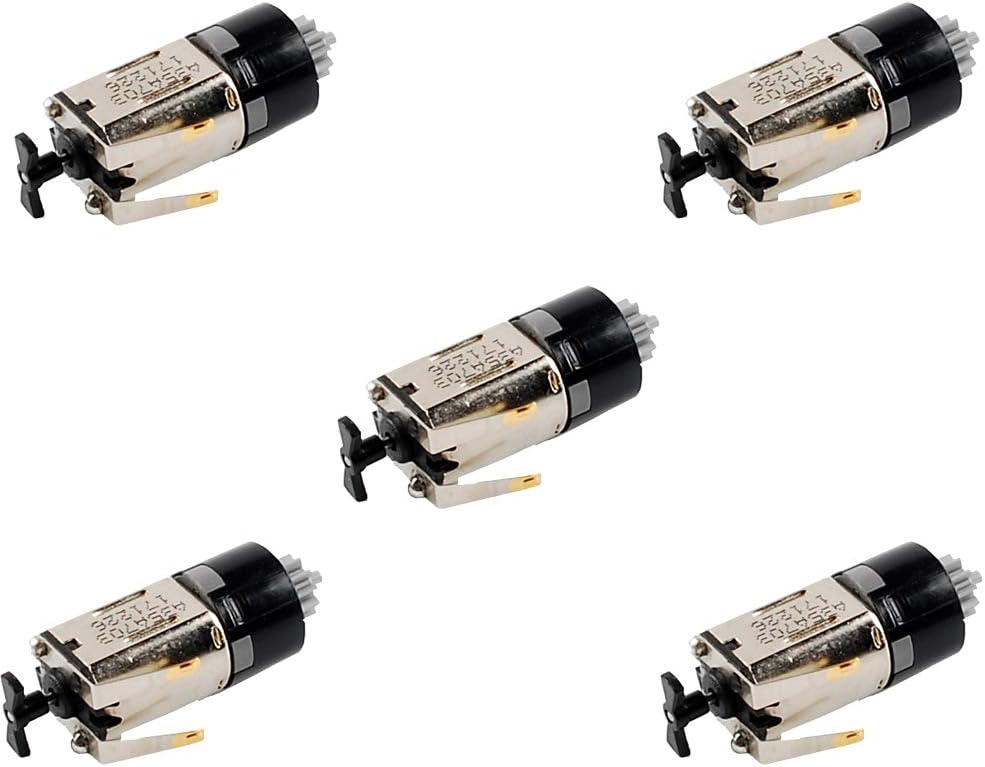

This motor set stands out for its integration of a high-quality hall encoder. Rated at 4.7 stars it offers the precision needed for advanced robotics. The all-metal gearbox provides superior durability compared to plastic alternatives.
We may earn a commission when you buy through this link, at no additional cost to you.
The 1:90 gear ratio delivers high torque making it ideal for lifting or climbing tasks. The encoder outputs two 90 degree quadrature waves allowing accurate speed measurement. This is crucial for robots needing precise movement patterns.
While the all-metal build adds weight it ensures the motor lasts longer under stress. The LED indicator simplifies debugging connections during setup. These trade-offs are acceptable given the performance gains.
Advanced hobbyists building smart cars or robots should choose this motor. It balances power and control effectively. We recommend it for projects requiring reliable feedback systems.
The integrated hall encoder allows for real time measurement of speed and position. This ensures your robot moves exactly as programmed without drifting.
Upgraded to all-metal gearbox and shaft this motor resists wear and tear. It enables higher torque output and a much longer service life.
We may earn a commission when you buy through this link, at no additional cost to you.
For budget builders the Acxico N20 set is hard to beat. It delivers a 4.6 rating for quality and reliability. These motors are perfect for small scale projects like line followers.
We may earn a commission when you buy through this link, at no additional cost to you.
The metal gearbox is a major plus at this price range. It reduces wear compared to plastic gears. The D-type shaft ensures a secure connection to wheels.
The slow speed is a feature not a bug for precision crawling. While torque is limited it is sufficient for light robots. This makes it a safe choice for beginners.
If you need many motors for a fleet or large robot this set is ideal. It offers excellent value for money. We recommend it for prototyping and educational builds.
This pack includes three motors allowing you to equip multi-wheeled robots without breaking the bank. It is perfect for educational learning.
The full metal gearbox ensures that the motor can withstand higher loads than plastic equivalents. It extends the service life of the unit.
We may earn a commission when you buy through this link, at no additional cost to you.
This planet gear motor is a beast in terms of power. With a 4.6 rating it is trusted for serious applications. It provides 90kg.cm of torque which is rare in mini motors.
We may earn a commission when you buy through this link, at no additional cost to you.
The voltage range from 6V to 22V offers great flexibility. You can use it in high voltage systems without damage. The metal gears handle the stress of heavy loads.
The size is larger than standard hobby motors but the power justifies it. It is designed for industrial like tasks. This makes it premium for DIY automation.
Use this for rotating tables or heavy robotic arms. It is a robust solution for demanding projects. We recommend it for advanced engineers.
The 90kg.cm torque allows this motor to lift heavy objects or drive large mechanisms. It is perfect for rotating tables.
Operating from 6V to 22V this motor adapts to various power supplies. This flexibility is key for custom robotics.
We may earn a commission when you buy through this link, at no additional cost to you.
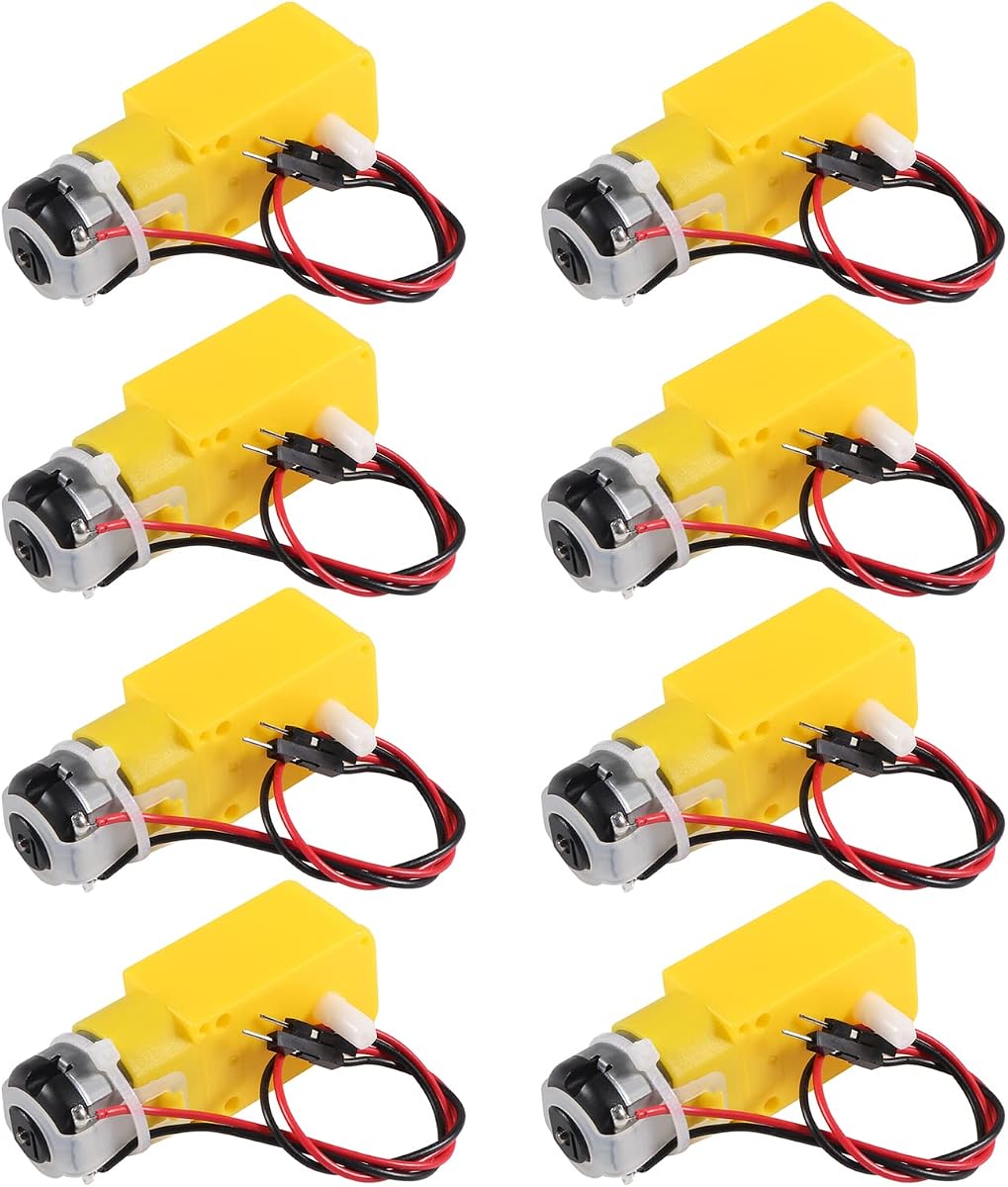
This kit is a complete package for robot car builders. Rated 4.5 stars it simplifies the assembly process. You get eight motors and four wheels ready to go.
We may earn a commission when you buy through this link, at no additional cost to you.
The 1:48 ratio offers a balance of speed and torque. It is ideal for smart car projects. The wires come with male connectors for breadboards.
The wheels included are functional but might need trimming. However this saves time finding compatible parts. It is a practical choice for prototyping.
For teams needing multiple units this kit is efficient. It covers basic needs without extra cost. We recommend it for classroom projects.
You get motors plus wheels making this a one stop shop for car builds. It removes the hassle of sourcing separate parts.
The wires come with male 2.54mm connectors. This makes it easy to plug into a breadboard or terminal blocks.
We may earn a commission when you buy through this link, at no additional cost to you.
This motor comes with a wheel kit making it very convenient. The 4.4 rating reflects good quality control. The metal gears and bracket add value.
We may earn a commission when you buy through this link, at no additional cost to you.
The pure copper coil ensures low heat generation. It improves torque and efficiency significantly. The enclosed structure saves space on your chassis.
The bracket simplifies mounting but alignment can be tricky. The included tires provide good grip. This is a complete drive solution.
If you want a ready to mount set pick this. It saves time on fabrication. We recommend it for smart car models.
Pure copper coils are used to ensure low resistance and high stability. This improves the motor life and power output.
It includes a mounting bracket and rubber tire wheel kit. This reduces the need for separate purchases.
We may earn a commission when you buy through this link, at no additional cost to you.
This motor is praised for its dual voltage capability. Rated 4.6 it offers reliability for various systems. The metal bracket is a strong addition.
We may earn a commission when you buy through this link, at no additional cost to you.
At 12V it delivers 27 kg.cm torque. The ratio is ideal for balance cars. The 37mm size fits many chassis designs.
The wires are functional but short for some layouts. This is easily fixed with extensions. The torque is sufficient for heavy loads.
For smart balance car projects this is top tier. It offers the power needed for stability. We recommend it for precision builds.
This motor supports both 6V and 12V supplies. It adapts to your power source seamlessly.
Stall torque reaches 15 kg.cm at 6V and 27 at 12V. This allows for heavy load lifting.
We may earn a commission when you buy through this link, at no additional cost to you.
This motor has a perfect 5.0 rating for quality. It is a strong contender for RC cars. The double-shaft design is its main feature.
We may earn a commission when you buy through this link, at no additional cost to you.
The pure copper rotor boosts conductivity by 30%. It ensures reliable power for precision tasks. The D-shaped shaft prevents slipping.
It is small at 25mm diameter but powerful. The noise level is low for quiet operation. This suits indoor robotics well.
DIY toy builders will love the flexibility of the double shaft. You can drive components on both sides. We recommend it for custom setups.
Pure copper winding increases conductivity and torque. This provides reliable power for demanding applications.
The strong magnetic double-shaft configuration allows connecting wheels on both ends. It increases mounting options.
We may earn a commission when you buy through this link, at no additional cost to you.
The Gikfun Type 130 is a classic hobby motor. Rated 4.2 it is simple and effective for fans. It comes in a pack of six.
We may earn a commission when you buy through this link, at no additional cost to you.
Its high speed at 3V makes it great for spinners. For robots it needs external reduction. The wires are ready for Arduino.
The lack of gears is a trade-off for size. You must source gears separately. This keeps the cost low.
For brush-bots or solar cars this is perfect. It is versatile and small. We recommend it for basic experiments.
Speed reaches 16000 RPM at 3V. This is ideal for high speed applications like fans.
It works efficiently with battery and solar power. This makes it perfect for solar powered cars.
We may earn a commission when you buy through this link, at no additional cost to you.
This motor is designed for tiny robotic builds. Rated 4.4 it offers high torque in a small case. The planetary reducer is integrated.
We may earn a commission when you buy through this link, at no additional cost to you.
At 3V it provides 110 rpm with high torque. This is perfect for micro robots. The current draw is low at 42 mA.
The size is minimal but torque is decent. It requires wheels that match the shaft. This is great for compact drones.
If space is limited choose this option. It maximizes power in a small form factor. We recommend it for micro projects.
The micro planetary reducer motor provides high torque for its size. It is perfect for DIY robot gearbox motor.
Current draw is low at 42 mA. This ensures efficiency in battery powered projects.
We may earn a commission when you buy through this link, at no additional cost to you.
This motor is a popular upgrade for RC cars. Rated 4.4 it is known for speed. It fits standard RC dimensions.
We may earn a commission when you buy through this link, at no additional cost to you.
Max RPM is 12000 which is great for speed. You will need gears for torque. The shaft is 2.3mm for couplers.
It is a practical replacement for old motors. It saves money compared to buying whole kits. The noise level is low.
For hobby repair work this is ideal. It restores power to old toys. We recommend it for upgrades.
Built for strong output in a small size. It provides reliable speed for DIY power applications.
Ideal for PCB projects and science experiments. It is versatile for custom motorized builds.
We may earn a commission when you buy through this link, at no additional cost to you.
Choosing the right motor requires balancing voltage, torque, size, and features. This guide explains the critical factors to ensure your robot performs reliably.
Ensure the motor supports your power supply. Most robots use 6V or 12V systems. Matching this prevents damage to the motor.
Check the voltage limits before ordering to ensure compatibility.
A higher gear ratio increases torque but reduces speed. Robots need high torque for lifting while cars need speed. Select the ratio that matches your robot's goal.
Use a high ratio for heavy loads and a lower ratio for speed.
D-shaped or flat shafts prevent slipping under load. Round shafts can slip and damage your drive system. Ensure the shaft type matches your coupling.
Prefer D-shaped shafts for stability and secure connections.
Metal gears last longer than plastic ones. For heavy duty or frequent use choose metal construction. It ensures the motor survives wear and tear.
Always check the gearbox material before buying to avoid breakage.
Encoders provide feedback for precise control. Without them speed is approximate. For advanced motion use motors with hall or optical encoders.
Look for hall encoders if you need accurate position tracking.
Measure your chassis space before ordering. Some motors are too wide or long for small frames. Compact motors help with weight and balance.
Compare the motor dimensions to your design layout.
Motors may come with brackets or need custom mounts. Brackets save time and ensure alignment. Check if mounting holes are pre-drilled.
Verify if a mounting bracket is included in the pack.
Pre-terminated wires or standard leads affect setup time. 2.54mm headers work best with breadboards. Avoid wires that are too short for your layout.
Check wire length and connector type for easy integration.
Start by checking the voltage requirements. Never exceed the rated limit as it burns out the motor. Use a battery that matches the V rating.
Secure the motor to the frame using brackets or zip ties. Ensure shafts are aligned with wheels to avoid binding. This reduces vibration and heat.
Monitor the motor during operation. If it gets hot or makes noise it may be overloading. Adjust the load or add cooling to maintain performance.
6V and 12V are the most common options. 6V is safer for beginners while 12V offers more power for heavy loads. Always check your battery source.
Yes most robotics need a gearbox. Motors are fast and low torque. Gearboxes slow them down to increase torque and grip.
Overheating is often caused by overloading. Ensure wheels are not too heavy and shafts are aligned. Use metal gears to dissipate heat better.
A D-shaft has a flat side to prevent slipping. Round shafts can spin freely in the coupling. D-shafts are more secure for high torque.
Encoders allow the robot to know its exact speed and position. This helps for precise turns and obstacle avoidance. Without it speed is estimated.
Yes but you need a driver like L298N. Arduino pins cannot power motors directly. The driver acts as a switch for high current.
Use zip ties or double sided tape for temporary fixes. 3D printing a custom mount is the best option. It ensures stability during movement.
Yes they are worth it for durability. Plastic gears wear out faster under load. Metal gears prevent breakdowns and extend service life.
We highlighted ten top motors covering budget to premium needs. The 2Pack TT Motor with Encoder leads for precision. The Acxico set leads for affordability.
Prioritize torque and voltage compatibility over brand. A motor that fits your power supply works best. Check if brackets and wheels are included.
Verify current prices and stock before purchasing. Availability changes often. We hope this guide helps you build a better robot.