
Audio Effects Processor, 24 Bit Digital Signal Rackmount Unit
5.0Editor score
199 preset effects included
Dual channel processing support
Standard 19 inch rackmount
This guide compares the top hardware reverb units for musicians and producers, featuring analog and digital options from trusted brands to find the perfect
Hardware reverb units are essential tools for adding depth and space to any audio mix. Whether you prefer the warmth of analog springs or the precision of digital algorithms, these devices transform dry signals into immersive soundscapes that elevate your recordings.
We have evaluated ten standout models based on their sound quality, feature sets, and build durability. Our comparison focuses on how each unit handles different audio sources, from vocals to instruments, ensuring you find a device that meets your specific creative needs.
Each pick in this list highlights key strengths and potential limitations to help you decide quickly. Keep in mind that availability and stock levels may change over time so always verify current details before making your final purchase decision for your studio or stage.
5.0Editor score

4.9Editor score

4.8Editor score
The following table provides a side-by-side overview of each unit to help you compare their core capabilities and physical specifications at a glance.




This digital stereo reverb pedal stands out with its high rating and versatile control set. It delivers rich spatial effects that are ideal for both live and studio environments.
We may earn a commission when you buy through this link, at no additional cost to you.
The unit offers dedicated shimmer controls and modulation switches that allow for deep tonal shaping. You can adjust decay and pre-delay independently to craft everything from subtle space to massive walls of sound.
While it sits at a premium price, the sound quality justifies the investment. The only minor drawback is the lack of MIDI control which might limit advanced routing scenarios for some users.
It is perfect for guitarists and keyboard players who want top-tier reverb without compromising on sound depth. We highly recommend this unit for anyone seeking a reliable and expressive reverb solution.
The stereo reverb algorithm provides a wide soundstage that enhances any mix without muddying the mid frequencies.
Modulation switches and shimmer controls add a dreamy layer to your sound that works well for ambient passages.
We may earn a commission when you buy through this link, at no additional cost to you.
The BigSky is a powerhouse for those who need extensive reverb options in a single unit. It is known for its multidimensional capabilities that go beyond standard reverb types.
We may earn a commission when you buy through this link, at no additional cost to you.
Its extensive parameter control allows for very fine-tuning of the sound. You can shape every aspect of the reverb to fit perfectly within your mix without unwanted coloration.
The large footprint and complex menus might be overwhelming for casual players. However, for studio work or complex live setups, the flexibility it offers is unmatched in the current market.
This unit is best for professionals who need a definitive reverb solution. It is a worthy investment for anyone serious about high-end sound design and performance.
The multidimensional engine creates complex and evolving reverb textures that change dynamically with your playing style.
Its algorithms are designed to match studio-grade standards making it suitable for professional recordings and mixes.
We may earn a commission when you buy through this link, at no additional cost to you.
This processor offers a remarkable combination of features at a very accessible price point. It is designed for live and studio use with dual channel processing to handle multiple signals.
We may earn a commission when you buy through this link, at no additional cost to you.
With 199 preset effects and 24 bit processing it delivers clear sound that preserves every nuance of your audio. The dual channel design lets you apply different effects to separate sources simultaneously.
The interface is basic but functional for quick adjustments. While it lacks advanced connectivity options it remains a top choice for value seekers needing reliable reverb in a rack.
It is ideal for small venues or home studios where budget is a primary concern. You get professional sound quality without paying for unnecessary bells and whistles you might not need.
Dual channel parallel processing allows you to route audio flexibly so different sources can have unique reverb settings.
This unit provides high performance specs at a low cost making it one of the best budget options available today.
We may earn a commission when you buy through this link, at no additional cost to you.
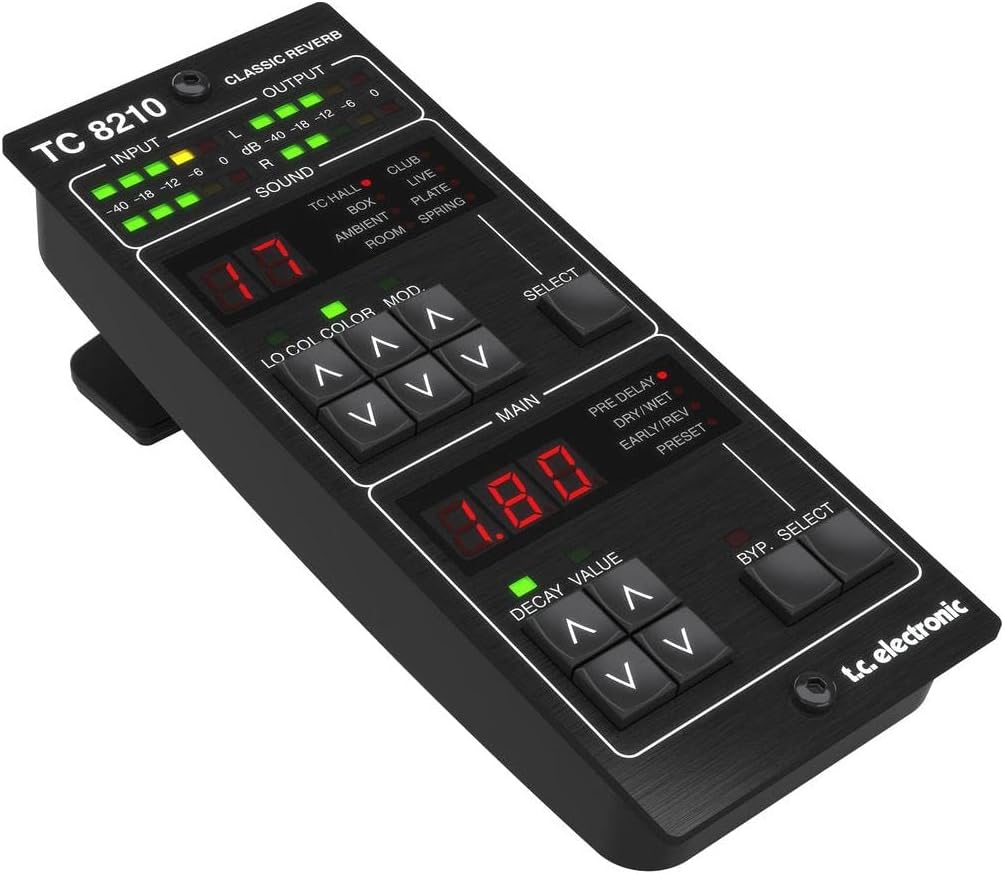
This unit brings classic TC reverb sound directly to your desktop with a dedicated interface. It bridges the gap between software flexibility and hardware usability for modern DAW workflows.
We may earn a commission when you buy through this link, at no additional cost to you.
The desktop interface offers intuitive hands-on control which makes tweaking sounds faster than using a mouse. It includes custom-built signature presets from favorite artists to help you get started quickly.
Since it is a plug-in with optional hardware it depends on your computer setup. The sound quality preserves the natural characteristics of the source which is vital for professional mixing applications.
It is best for producers who already use TC software but want physical control. This unit extends your studio workflow efficiently without the cost of full hardware reverb racks.
The desktop controlled plug-in design allows for seamless integration with your existing DAW setup for easy monitoring.
Custom presets from famous artists provide a shortcut to high quality sounds that have been battle tested in studios.
We may earn a commission when you buy through this link, at no additional cost to you.
This pedal offers the most authentic emulation of a classic mid-seventies analog device. It combines tape echo and reverb to recreate vintage warmth that digital units often struggle to match.
We may earn a commission when you buy through this link, at no additional cost to you.
Full modeling of the multi-head tape delay mechanism and spring reverb ensures exacting emulation of original hardware. You can tweak footswitch functionality via the UAFX Control app for personalized performance.
While it requires a separate power supply and app control the sound quality is worth it. The silent switching and buffered bypass keep your signal clean even when the unit is off.
It is perfect for players looking for authentic vintage textures. If you want the classic Japanese ambience device sound this unit is a reliable and detailed choice for your rig.
The emulation captures the warmth and saturation of analog tape to give your tracks an authentic retro vibe.
The UAFX Control app allows you to adjust realtime effects and customize oscillation sounds for unique tones.
We may earn a commission when you buy through this link, at no additional cost to you.
This high fidelity reverb unit features rebuilt programs for vast tonal improvements over the original series. It includes a new ducking and swelling feature that adds dynamic expression to your playing.
We may earn a commission when you buy through this link, at no additional cost to you.
Each program has size and diffuse controls plus a feedback EQ control for precise shaping. With 128 on-board presets accessible via the menu you have plenty of sounds ready to use immediately.
The menu screen navigation is simple enough for adjustments on the fly. While it requires a dedicated power supply the build quality and sound clarity are consistent with high end pedal standards.
It is an excellent choice for players who need expressive control. The ducking feature especially makes it stand out for dynamic reverb management in live performance settings.
The ducking and swelling feature allows the reverb to fade automatically when you play creating a cleaner sound.
All six programs were rebuilt to ensure the sound remains clear and detailed even at high gain levels.
We may earn a commission when you buy through this link, at no additional cost to you.
This analog reverb module brings true spring sound to your modular setup. It features a dual spring reverb design that captures the gritty bounce of vintage units.
We may earn a commission when you buy through this link, at no additional cost to you.
With 72HP height and dual spring reverb it integrates well into standard rack cases. The two mute footswitch jacks and unbalanced outputs make it flexible for various signal paths and routing needs.
The limited depth control might restrict fine tuning for some users. However for its authentic analog character and modular compatibility make it a solid choice for specific sonic needs.
It is best for modular enthusiasts needing authentic spring bounce. If you want a raw and physical reverb sound this module provides that character reliably in your system.
The dual spring design offers rich mechanical interaction for authentic spring sounds that are hard to digitalize.
Designed for 72HP spaces it fits easily into Eurorack cases to expand your analog reverb capabilities.
We may earn a commission when you buy through this link, at no additional cost to you.
This pedal provides seven distinct reverb modes in a compact mini size. It is built with a whole aluminium-alloy shell that is durable and resistant to daily stage wear and tear.
We may earn a commission when you buy through this link, at no additional cost to you.
The true bypass design ensures your dry tone remains transparent when the effect is off. Simple knobs allow you to mix the reverb level effectively without needing to navigate complex digital menus.
While it lacks expression inputs it covers basic needs well for guitarists. The LED indicator clearly shows when the pedal is active which helps prevent accidental engagement during shows.
It is ideal for players needing a reliable and affordable option. If you want a simple and sturdy reverb pedal that fits any board this unit delivers consistent quality.
The mini size allows it to fit easily on crowded pedalboards without consuming extra space.
True bypass circuit design keeps your signal transparent when the pedal is not engaged.
We may earn a commission when you buy through this link, at no additional cost to you.
This reverb offers 24 studio quality algorithms that are counted and refined over time. It delivers pristine classic sounds alongside ambient options for diverse tonal needs in any mix.
We may earn a commission when you buy through this link, at no additional cost to you.
The unit is easy to use and fast to dial in for live performance. Tap functions allow you to set rates quickly so you can focus on playing instead of menu navigation.
While it does not save presets the algorithms cover most common needs well. The sound quality is high enough to be used on stage or in the studio without compromise or issues.
It is suitable for players who need a broad range of sounds quickly. The combination of classic and ambient modes makes it a versatile choice for various musical styles.
With 24 studio quality algorithms you get a wide selection of top tier sounds without complex setup.
Tap functions allow you to sync reverb times quickly which is useful for rhythmic performances and songs.
We may earn a commission when you buy through this link, at no additional cost to you.
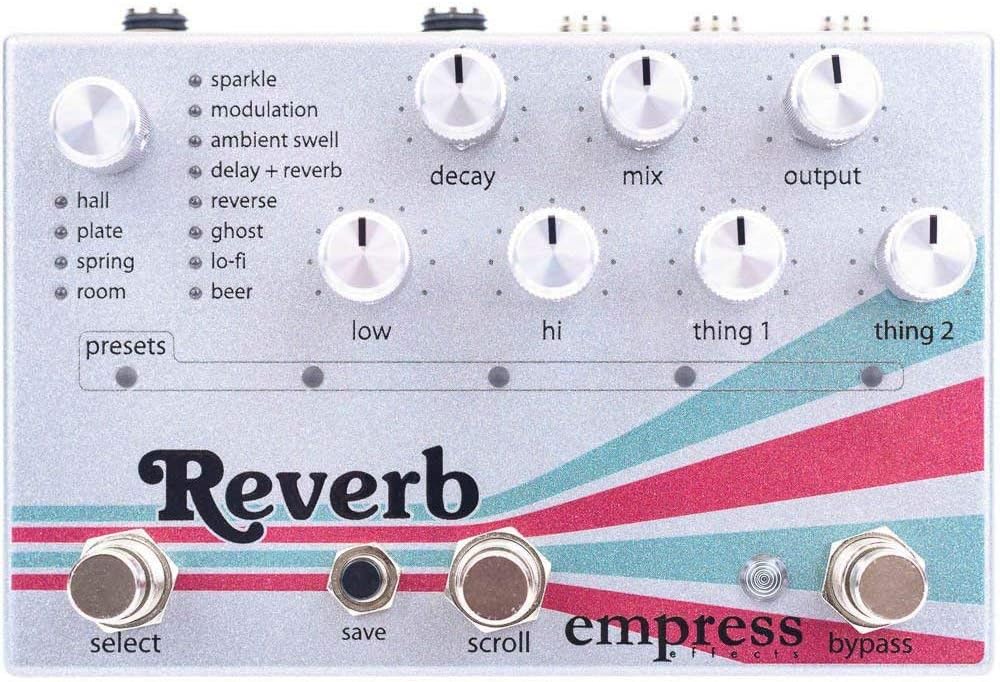
Made in Kansas City USA this unit is an extremely versatile unit that covers many sounds. It ranges from small room sounds to endless washes of ambiance for different musical styles.
We may earn a commission when you buy through this link, at no additional cost to you.
The EQ lets you adjust the tone texture to be bright or dark depending on your needs. A Pre-Delay knob allows you to select a short delay before the reverb begins to shape timing effectively.
It runs on 9V DC negative center power and consumes 74mA which is standard for most pedals. While it has only three knobs it is efficient for quick adjustments during live shows.
It is ideal for players who want US built quality and flexibility. The tone shaping capabilities make it a great companion for any guitar rig needing versatile effects.
The EQ adjusts tone lets you tailor the brightness or darkness of the reverb to fit your mix.
The Pre-Delay knob helps you choose between slap-like sounds and spacey spring sounds for better articulation.
We may earn a commission when you buy through this link, at no additional cost to you.
Selecting the right unit involves considering several key factors that influence sound and usability in your setup.
Look for units that offer high resolution digital processing or authentic analog springs depending on your needs. Studio grade algorithms ensure clarity and depth that do not muddy your mix.
Prioritize sound quality that matches your genre to ensure your tracks sound professional.
Consider if you need presets modulation options or stereo inputs. Some units include ducking or shimmer which can add creative flexibility to your performances.
Ensure the feature set matches your workflow to avoid overpaying for unused features.
Decide whether a pedal rack unit or modular module fits your studio space. Pedals are great for guitarists while rack units suit larger studio environments.
Choose a format that integrates seamlessly with your existing gear and workspace.
Check for MIDI input outputs or expression jack support for integration with other gear. Digital units often offer deeper control over parameters than basic models.
Select a unit with the right control options to enhance your creative flexibility.
Metal chassis and true bypass switches are crucial for long term use especially during live performances. Avoid plastic enclosures if you plan to tour regularly.
Invest in durable construction to ensure the unit lasts through years of use.
Verify the voltage and current requirements to avoid damaging your equipment. Standard 9V units are easier to power than those requiring isolated supplies.
Make sure you have the right power source available for your new unit.
Look for intuitive controls and clear labels if you plan to tweak settings on the fly. Complex menus can be frustrating during a live set.
Choose an interface that allows quick adjustments without interrupting your creativity.
Balance the cost against the features to ensure you get value for your money. Some affordable models offer high quality sound without the premium price tag.
Determine your budget early to find the best unit that meets your needs.
Always start by reading the manual to understand the specific controls of your unit. Most models require you to connect inputs and outputs properly to maintain signal integrity.
For digital units save your presets regularly if the option is available. This ensures you do not lose custom settings during power outages or transport changes.
Keep your unit in a cool dry place to prevent electronic degradation. Cleaning the knobs and footswitches regularly helps maintain their performance over time.
Analog units use physical springs or plates to create sound while digital units use algorithms. Analog offers warmth but digital provides precision and more variety in settings.
Yes but you may need adapters to convert signal levels. Rack units are usually larger so consider space and power supply compatibility.
Most units require a dedicated power supply so check the manual. Some models share power sources but it is safer to use isolated adapters.
A unit with clear and bright algorithms works well for vocals. Look for features that preserve the natural tone of the voice without distortion.
Connect both left and right outputs to your mixers or amps. This requires a stereo cable and compatible outputs on your equipment.
Hardware offers tactile control and does not use computer resources. However plugins can offer more flexibility and lower costs depending on your workflow.
We have highlighted ten top units including the Strymon blueSky V2 for its superior sound and the Audio Effects Processor for its value. Each option serves different needs from live performance to studio production.
Prioritize sound quality and format to ensure the unit fits your workflow. Consider your budget and specific features like stereo output or modulation options.
Remember to verify current availability and specs before purchasing to ensure compatibility. These tools can transform your sound significantly so choose the one that inspires you most.