
LGA 1155 Motherboard H61 for Intel 2th/3th Core i7/i5/i3 DDR3
5.0Editor score
Supports 2nd and 3rd gen Intel
Dual channel DDR3 memory slots
M.2 NVMe and NGFF interface
Discover the top Lga 1155 Motherboard options for upgrades. This guide compares specs, features, and performance to help you choose the right platform.
Finding a reliable Lga 1155 Motherboard is essential for upgrading older systems. These boards support second and third generation Intel Core processors, offering a cost effective path to improved performance without replacing the entire setup.
We evaluated ten real products based on chipset features, memory support, and expansion slots. Our analysis includes budget friendly options and premium boards to ensure you find a match for your specific computing needs and budget constraints.
Each pick highlights key strengths and potential trade-offs for transparency. Prices and availability can change frequently so please verify current listings before purchasing to ensure you get the best value for your investment today.
5.0Editor score

4.3Editor score

4.1Editor score
This side-by-side comparison highlights the key specifications of each board to help you make an informed decision based on your specific hardware requirements and performance goals.



This budget friendly Lga 1155 Motherboard delivers excellent value for users seeking to revive older systems. With a perfect rating from verified users, it stands out for its ability to support a wide range of Intel Core and Xeon processors.
We may earn a commission when you buy through this link, at no additional cost to you.
The inclusion of an M.2 NVMe slot is a standout feature for an H61 chipset board. This allows for faster storage speeds compared to traditional SATA drives while maintaining compatibility with legacy DDR3 memory up to sixteen gigabytes.
Users should note that the package does not include a manual or battery, which may require some initial troubleshooting. However, the clear specifications and wide CPU support make it a solid choice for cost conscious builders.
Buy this board if you need a reliable platform for office work or light gaming without spending much. It is particularly well suited for those upgrading from older SATA SSDs to NVMe drives.
The M.2 interface bridges the gap between legacy and modern storage standards. It supports both NVMe and NGFF formats allowing users to choose the fastest compatible drive.
Support for Xeon E3 V2 series processors makes this board versatile for budget workstations. You can use server grade CPUs that often offer more cores for a lower price.
We may earn a commission when you buy through this link, at no additional cost to you.
The MACHINIST H61 offers a compact Flex-ATX design that fits well in smaller cases. While it has a lower rating than other options, it provides essential features for basic systems at a very competitive price point.
We may earn a commission when you buy through this link, at no additional cost to you.
This board supports modern storage through its M.2 interface which can be configured for NVMe or NGFF drives. It also supports a wide range of CPUs including Xeon E3 V2 series making it versatile for different use cases.
The main limitations include a 100M LAN speed which is outdated for modern high speed internet and the need to purchase a battery separately. Users should be aware of these trade-offs before buying.
Choose this board if you need a small form factor system for a tight budget. It works best for office PCs or home media centers where network speed is not a critical requirement.
The Flex-ATX design allows for installation in smaller enclosures. This is ideal for building compact home theater PCs or space constrained workstations.
The M.2 slot supports both NVMe and NGFF formats. This flexibility ensures you can use various modern SSDs without needing adapters.
We may earn a commission when you buy through this link, at no additional cost to you.
The Gigabyte Z77-DS3H stands out as a robust option for enthusiasts who need overclocking capabilities. The Z77 chipset allows for unlocked processor tuning which is not available on H61 or H77 boards.
We may earn a commission when you buy through this link, at no additional cost to you.
This ATX board includes Gigabit LAN for reliable networking and supports RAID configurations for data redundancy or performance boosts. It is well suited for users who need more connectivity and expansion slots.
The absence of an M.2 slot is a notable drawback for modern storage needs. However, the strong build quality and comprehensive feature set make it a favorite for classic gaming builds.
Buy this board if you plan to overclock your CPU or need multiple PCIe slots. It is ideal for users prioritizing performance and reliability over modern storage interface convenience.
The Z77 chipset is the last native platform for significant overclocking on this socket. This allows users to extract extra performance from unlocked Intel processors.
RAID support allows you to combine multiple drives for safety or speed. This feature is valuable for systems that handle large files or critical data.
We may earn a commission when you buy through this link, at no additional cost to you.
The ASUS P8Z77-V includes advanced features like USB BIOS Flashback for easy updates without a CPU. This makes it highly convenient for maintaining system stability and compatibility over time.
We may earn a commission when you buy through this link, at no additional cost to you.
Smart DIGI+ Power Control ensures precise voltage adjustments for stability and efficiency. Fan Xpert 2 provides optimized fan speed control to keep noise levels low while maintaining cool temperatures.
While powerful, this board can be complex for beginners due to its extensive features. The price point is also higher than budget options so it is best for those who need specific advanced functionalities.
Choose this board if you need robust power management and BIOS update convenience. It is excellent for power users who want granular control over their system performance and cooling.
USB BIOS Flashback allows you to update firmware using just a USB drive. This saves time and effort if a CPU is not installed or compatible.
Fan Xpert 2 adjusts fan speeds based on system load. This helps maintain optimal temperatures without unnecessary noise during light usage.
We may earn a commission when you buy through this link, at no additional cost to you.
This H61 Gaming ATX board combines affordability with modern storage options. It supports M.2 NVMe drives and includes HDMI output making it a strong contender for budget gaming builds.
We may earn a commission when you buy through this link, at no additional cost to you.
The use of solid state capacitors ensures better durability and stability compared to standard boards. Three phase power and a 24+4 pin socket provide reliable power delivery for standard components.
While the power delivery is basic for high end overclocking, it is sufficient for typical use cases. The lack of brand recognition means you might rely more on community support for drivers.
Buy this board if you want a full size ATX with M.2 support at a low cost. It is a great choice for budget gaming PCs that need standard performance without extra frills.
Solid state capacitors provide longer life and better stability under load. This helps ensure the motherboard lasts longer in daily use environments.
HDMI and VGA outputs allow for versatile monitor connections. This ensures you can connect to almost any display without needing extra adapters.
We may earn a commission when you buy through this link, at no additional cost to you.
The ASUS P8H77-V LE focuses on power efficiency and USB performance. Its EPU feature manages system power in real time to improve efficiency without sacrificing performance.
We may earn a commission when you buy through this link, at no additional cost to you.
USB 3.0 Boost allows you to select modes like Turbo or UASP for faster data transfer. This is useful for external storage devices that need high throughput for media or backups.
The board lacks an M.2 slot which limits modern storage options. However, its reliable performance and solid feature set make it a good option for general purpose office work or media use.
Choose this board if you need efficient power management and fast USB support. It is well suited for users who rely heavily on external drives and want a stable platform.
EPU technology adjusts power consumption based on system load. This helps reduce energy usage during lighter tasks like web browsing or document editing.
USB 3.0 Boost modes improve transfer speeds for external devices. This ensures you get the most out of your fast external SSDs or hard drives.
We may earn a commission when you buy through this link, at no additional cost to you.
The ASUS P8H77-V offers a full feature set with four memory slots supporting up to thirty two gigabytes. This makes it ideal for users who need more memory capacity than standard boards.
We may earn a commission when you buy through this link, at no additional cost to you.
It includes multiple SATA ports and supports RAID configurations for better data management. The board is well designed for office work or media production where stability and capacity are key.
The lack of M.2 support limits modern storage upgrades but SATA 6Gb/s is still capable for most tasks. The board price is on the higher side for older technology.
Buy this board if you need more than sixteen gigabytes of RAM on this platform. It is best for users who require high memory capacity and reliable SATA storage performance.
Four DIMM slots allow for up to thirty two gigabytes of DDR3 RAM. This is essential for virtual machines or heavy multitasking workflows.
Multiple SATA ports and RAID support offer flexible storage options. You can create arrays for speed or redundancy depending on your needs.
We may earn a commission when you buy through this link, at no additional cost to you.
The ASUS P8Z77-V LK provides multiple PCIe 3.0 slots for multi GPU configurations. This makes it suitable for users who need additional graphics power for workloads like rendering or compute tasks.
We may earn a commission when you buy through this link, at no additional cost to you.
With support for up to thirty two gigabytes of memory and Z77 overclocking capabilities it offers a strong performance platform. It is well built for stability under sustained loads.
Modern GPUs may not fit or perform fully due to the age of the platform. The price is also high for legacy technology so it is best for specific specialized needs.
Choose this board if you need multiple GPU slots on this generation. It is ideal for workstations that require high memory and specific PCIe slot configurations for legacy hardware.
Multiple PCIe x16 slots allow for two GPUs to be installed simultaneously. This is useful for rendering or computational tasks that benefit from parallel processing.
Support for up to thirty two gigabytes ensures future proofing for heavy tasks. Large memory helps maintain speed when running complex applications.
We may earn a commission when you buy through this link, at no additional cost to you.
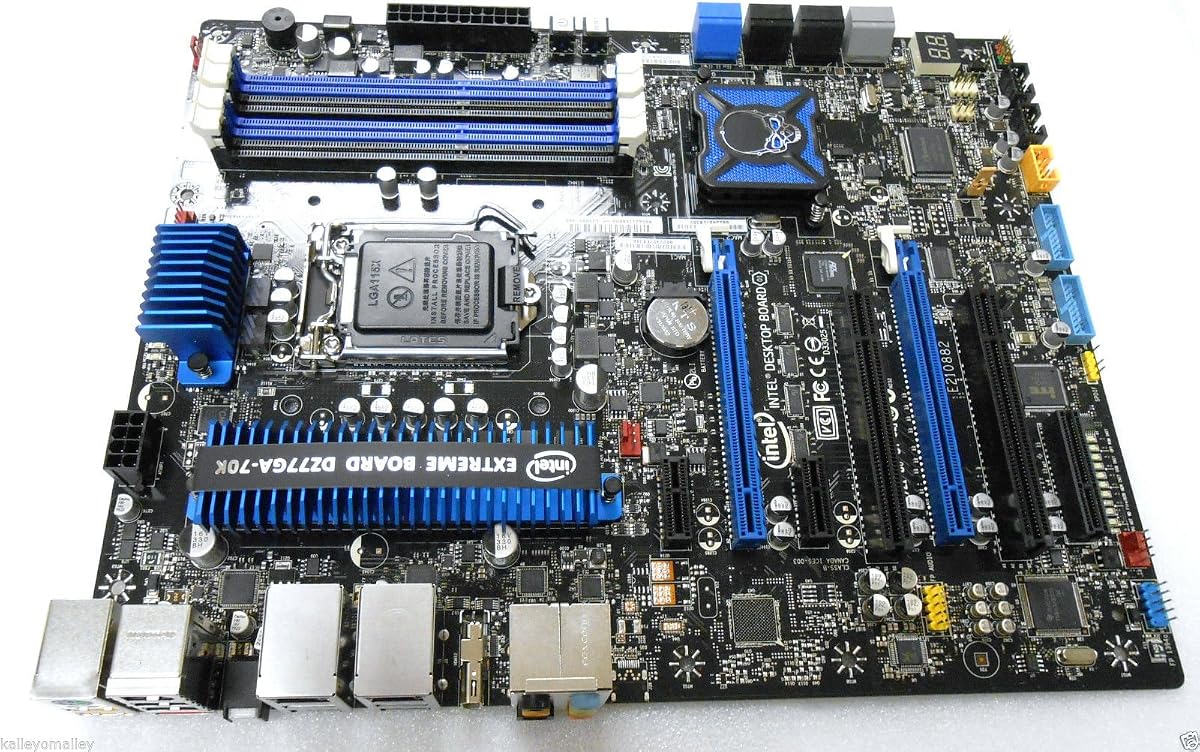
The Intel Z77 Extreme features dual Gigabit LAN ports which are rare on consumer boards. This makes it highly suitable for network intensive tasks or small server applications requiring redundancy.
We may earn a commission when you buy through this link, at no additional cost to you.
As a genuine Intel product it offers stable performance and solid build quality. Support for PCIe 3.0 ensures that graphics cards can operate at full speed for better rendering performance.
Finding this board now may be difficult as it is older technology. The lack of M.2 slots means you will rely on traditional SATA storage which is slower than NVMe options.
Buy this board if you need dual network ports for stability or speed. It is ideal for home servers or specific networking tasks that require multiple Ethernet connections.
Dual Gigabit LAN allows for link aggregation or failover. This ensures your network connection stays up even if one cable or port fails.
Firewire support is included for older professional peripherals. This is useful if you have legacy cameras or audio interfaces that require it.
We may earn a commission when you buy through this link, at no additional cost to you.
The ASUS P8B75-M/CSM is designed with business users in mind. Its CSM features and high rating indicate strong reliability and long term stability for daily work tasks.
We may earn a commission when you buy through this link, at no additional cost to you.
UEFI BIOS provides an intuitive GUI for easy configuration and management. EPU technology ensures energy savings without impacting performance which is useful for office environments.
Overclocking is not supported on this chipset so you may not achieve the highest speeds for unlocked CPUs. However, stability is often more important for professional work.
Choose this board if you need a stable platform for business or office use. It is ideal for users who prioritize reliability and power efficiency over raw performance tuning.
CSM features offer tools for system management and reliability. These are beneficial for maintaining stable environments in small business settings.
UEFI BIOS allows for easier configuration than older legacy BIOS. The graphical interface makes adjusting settings straightforward for all users.
We may earn a commission when you buy through this link, at no additional cost to you.
Selecting the right motherboard for your system requires understanding chipset differences and feature needs. This guide helps you navigate key factors to make a smart choice.
The chipset determines what features your motherboard supports. For example Z77 boards allow overclocking while B75 focuses on business stability. H61 and H77 offer basic functionality with fewer advanced options for performance tuning.
Choose a chipset that matches your goals such as Z77 for tuning or H61 for budget use.
Most boards support DDR3 memory up to sixteen or thirty two gigabytes. Ensure you check the number of slots to see how you can upgrade later. Two slots may limit future expansion compared to four.
Opt for boards with more slots if you plan to increase memory capacity for demanding applications.
Look for M.2 support if you want faster NVMe SSDs. Many older H61 boards include this adapter slot which is a huge benefit. If M.2 is absent ensure you have enough SATA 6Gb/s ports for your needs.
Prioritize boards with modern storage interfaces for faster boot and load times.
ATX boards provide more expansion slots while Micro ATX or Flex ATX save space. Ensure your case supports the selected size. Compact boards may limit future GPU or card additions.
Select a form factor that fits your case and allows for future upgrades.
Check for USB 3.0 ports for faster external transfers. Ethernet speed matters for internet access with Gigabit being standard. Also verify video outputs like HDMI if you do not have a graphics card.
Ensure the board offers enough ports for your peripherals and network needs.
Quality capacitors and power phases ensure stable operation under load. Better boards use solid state capacitors for longevity. This helps prevent crashes during long use or intensive tasks.
Choose boards with robust power design for better reliability and lifespan.
Established brands like ASUS or Gigabyte offer better driver support. This simplifies setting up the system with operating systems. Generic brands may lack documentation or community help when issues arise.
Prioritize well known brands for better software support and reliability.
Prices vary significantly between basic H61 and premium Z77 boards. Decide if you need advanced features or just basic functionality. Balancing cost with needs ensures you do not overspend on unused features.
Set a budget based on your actual needs to avoid unnecessary costs.
Install your CPU carefully aligning the triangle marker on the socket and processor. Apply thermal paste before mounting the cooler to ensure proper heat transfer. Secure the CPU cooler firmly to avoid pressure issues.
Connect your power cables from the main 24 pin and CPU 4 or 8 pin connectors. Plug in front panel connectors like power switch and HDD LED correctly. Ensure all cables are secured to prevent movement.
Keep your PC in a clean well ventilated area to avoid dust buildup. Regularly clean dust filters and fans to maintain proper airflow. Use compressed air to clear debris from the motherboard slots.
Yes many H61 boards support both 2nd and 3rd Gen Intel Core processors. However you may need to update the BIOS for full compatibility. Always check the manufacturer CPU support list before buying for your specific model.
H61 chipsets do not support CPU overclocking. If you plan to overclock you will need a Z77 board. H61 is sufficient for basic use without tuning needs.
All these boards use DDR3 non ECC unbuffered memory. You cannot use DDR4 or server RAM. Stick to desktop DDR3 modules for correct operation and compatibility.
Some budget boards omit manuals to reduce costs. You can often download drivers and guides online from the product page. Check the listing details for digital support resources before purchasing.
Some newer listings include M.2 slots that support NVMe via adapter. Check the description for M.2 support. Traditional boards only support SATA SSDs which are slower.
Not all boards include Gigabit LAN. Some budget models offer 100M speeds. Ensure you check connectivity specs if you need faster internet or file transfers.
We reviewed ten Lga 1155 Motherboard options ranging from budget H61 boards to premium Z77 platforms. Each offers different trade-offs between cost and features like overclocking or modern storage support.
Prioritize your specific needs such as memory capacity or storage speed before purchasing. Overclocking users should choose Z77 while budget builders may prefer H61 with M.2 support.
Prices and availability can change frequently so please verify current listings before purchasing. Checking real time data ensures you get the best value for your investment today.