
GIGABYTE Radeon RX 9070 XT Gaming OC 16G
4.7Editor score
Powered by Radeon RX 9070 XT
WINDFORCE Cooling System
Server-grade Thermal Conductive Gel
This guide compares the top 10 GPUs for Davinci Resolve to help you find the best performance for video editing and color grading in 2026.
Selecting the right graphics processing unit is critical for smooth video editing workflows. A capable GPU ensures real-time playback, efficient rendering, and robust support for modern effects within professional software suites.
We evaluated ten distinct graphics cards based on their architecture, memory capacity, and specialized features. This list covers a wide range of budgets and professional needs to help you identify the most suitable hardware for your specific workstation setup.
Each selection highlights key performance metrics and practical benefits for content creators. Please note that availability and pricing fluctuate frequently, so verifying current stock and costs before purchasing is always recommended for accurate planning.
4.7Editor score

4.6Editor score
4.9Editor score
The following table provides a side-by-side comparison of all ten selected graphics cards. It outlines their core specifications to help you quickly identify which model aligns best with your performance requirements.




This graphics card represents a top-tier choice for professional video editing. It boasts a high rating and delivers standout performance through its latest NVIDIA Blackwell architecture.
We may earn a commission when you buy through this link, at no additional cost to you.
Key strengths include its massive 16GB GDDR7 memory which ensures smooth playback of high-resolution timelines. The integrated AI capabilities significantly speed up tasks like noise reduction and scene cut detection.
While the performance is exceptional, it does draw significant power and generates heat. Users should ensure their power supply and cooling are adequate to support sustained workloads without thermal throttling.
For serious editors needing reliability and speed, this card is a strong recommendation. It balances cutting-edge features with robust engineering for daily professional use.
The Blackwell architecture provides enhanced compute units that accelerate rendering and effects processing significantly compared to previous generations.
With 16GB of GDDR7 memory, this card handles large textures and complex effects without stuttering during playback.
We may earn a commission when you buy through this link, at no additional cost to you.
This card offers a solid foundation for entry-level professional work. It has a good rating and stands out for its reliability and specialized professional drivers designed for stability.
We may earn a commission when you buy through this link, at no additional cost to you.
Its key strengths lie in consistent performance for standard editing tasks. The inclusion of ray tracing cores allows for realistic lighting effects in 3D compositing within Davinci Resolve.
However, its older architecture means it may struggle with the most demanding 8K effects compared to newer models. Users should weigh the need for absolute top speed against budget constraints.
This is a suitable choice for users needing dependable performance without breaking the bank. It works well for general editing and color grading on moderate resolution timelines.
Quadro certified drivers ensure fewer crashes and optimized performance specifically for creative applications like Davinci Resolve.
The card is designed to operate efficiently making it ideal for systems where power consumption is a critical concern.
We may earn a commission when you buy through this link, at no additional cost to you.
This graphics card remains a capable option for heavy computational tasks. It carries a solid rating and is known for its massive number of CUDA cores which aid in complex processing.
We may earn a commission when you buy through this link, at no additional cost to you.
Its strengths include robust AI acceleration via Tensor cores which helps with tasks like Magic Mask and object tracking. It also supports high-resolution displays well.
The main trade-off is that it is an older generation card. It may not support the very latest software features found in modern Blackwell or RDNA 4 architectures.
For those who can source a working unit it offers significant power for the price. It is recommended for users who need high core counts for rendering and simulation tasks.
With over 4600 CUDA cores this card excels at handling parallel compute tasks common in video rendering and simulation.
The dedicated Tensor cores accelerate AI-based effects making workflows like auto color correction and speech-to-text faster.
We may earn a commission when you buy through this link, at no additional cost to you.
This graphics card is designed specifically for content creators needing large memory. It has a strong rating and distinguishes itself with 32GB of video memory which is rare in this tier.
We may earn a commission when you buy through this link, at no additional cost to you.
The key strength is its ability to handle extremely large textures and complex 3D scenes without running out of video RAM. The PCIe 5.0 support ensures high bandwidth for data transfer.
Users may find that software optimization is not as extensive as competing NVIDIA products. Some specific effects or plugins might perform differently on this AMD architecture.
This is a great option for those who prioritize memory capacity over specific ecosystem features. It is recommended for workstation builds focused on heavy 3D rendering and AI tasks.
The 32GB capacity allows editors to work with multi-layered 8K projects without swapping to slower system memory.
PCIe 5.0 support provides double the bandwidth of previous standards ensuring data moves quickly between CPU and GPU.
We may earn a commission when you buy through this link, at no additional cost to you.
This card offers an impressive balance of price and capability for budget-conscious users. It carries a very high rating and is recognized for its solid raw performance in standard editing tasks.
We may earn a commission when you buy through this link, at no additional cost to you.
Its main strength is providing 16GB of memory at a lower price point than similar high-end models. This ensures smooth playback for most 4K timelines and even lighter 8K projects.
The trade-off is that it lacks some of the specialized AI features found in professional-grade cards. Certain proprietary effects may not render as quickly as on optimized NVIDIA hardware.
For creators who need value without sacrificing essential performance this is a top pick. It is highly recommended for those building a cost-effective editing workstation.
This card delivers high frame rates in playback scenarios allowing for smooth timeline navigation during editing.
The WINDFORCE cooling system keeps temperatures low ensuring stable performance during long export sessions.
We may earn a commission when you buy through this link, at no additional cost to you.
This is the highest performance option available for professional video editing. It has a decent rating and stands out for its massive 96GB of ECC memory which supports extreme workloads.
We may earn a commission when you buy through this link, at no additional cost to you.
The key strength lies in its ability to handle multiple complex AI models and 8K timelines simultaneously. The 5th Gen Tensor cores accelerate generative AI and noise reduction workflows significantly.
The trade-off is the extremely high cost and power requirements. This hardware is overkill for standard editing and is best suited for enterprise environments or large production houses.
For facilities requiring maximum stability and capacity this card is unmatched. It is recommended for studios where performance cannot be compromised regardless of budget.
With 96GB of error-correcting memory this card can hold entire project files in video RAM for instant access.
New neural shaders allow for more realistic lighting and texture rendering in real time during playback.
We may earn a commission when you buy through this link, at no additional cost to you.
This card brings high-end gaming performance to the creative workspace. It holds a high rating and is known for its rugged construction designed to withstand heavy usage cycles.
We may earn a commission when you buy through this link, at no additional cost to you.
Key strengths include phase-change thermal pads that ensure consistent thermal performance even under sustained loads. The military-grade components suggest long-term reliability for daily professional use.
Users must ensure they have the correct power connector available as it requires a specific high-wattage PSU setup. Additionally the large size may not fit smaller workstation chassis easily.
For those looking for a robust card that balances gaming and creative work this is a solid choice. It is recommended for users who need durability alongside high performance.
The phase-change thermal pad maintains optimal contact with the GPU core preventing overheating during long renders.
Military-grade capacitors and chokes improve the lifespan of the card reducing the risk of hardware failure over time.
We may earn a commission when you buy through this link, at no additional cost to you.
This card shows promise as a new contender in the professional market. It has a moderate rating and stands out for its 24GB of memory and ISV certified drivers.
We may earn a commission when you buy through this link, at no additional cost to you.
Its main strength is the dedicated media engines which support AV1 and HEVC encoding. This can speed up export times for modern video formats without needing extra hardware.
The lower user rating suggests there may be driver inconsistencies or compatibility issues to resolve over time. Users should be prepared for a potential learning curve.
For early adopters willing to test new technology this card offers high value. It is recommended for those who specifically need AV1 encoding support in a workstation card.
The twin transcoders allow for efficient processing of AV1 and HEVC which are becoming industry standard for web video.
ISV certification means the card has been tested with professional software to ensure stable performance.
We may earn a commission when you buy through this link, at no additional cost to you.
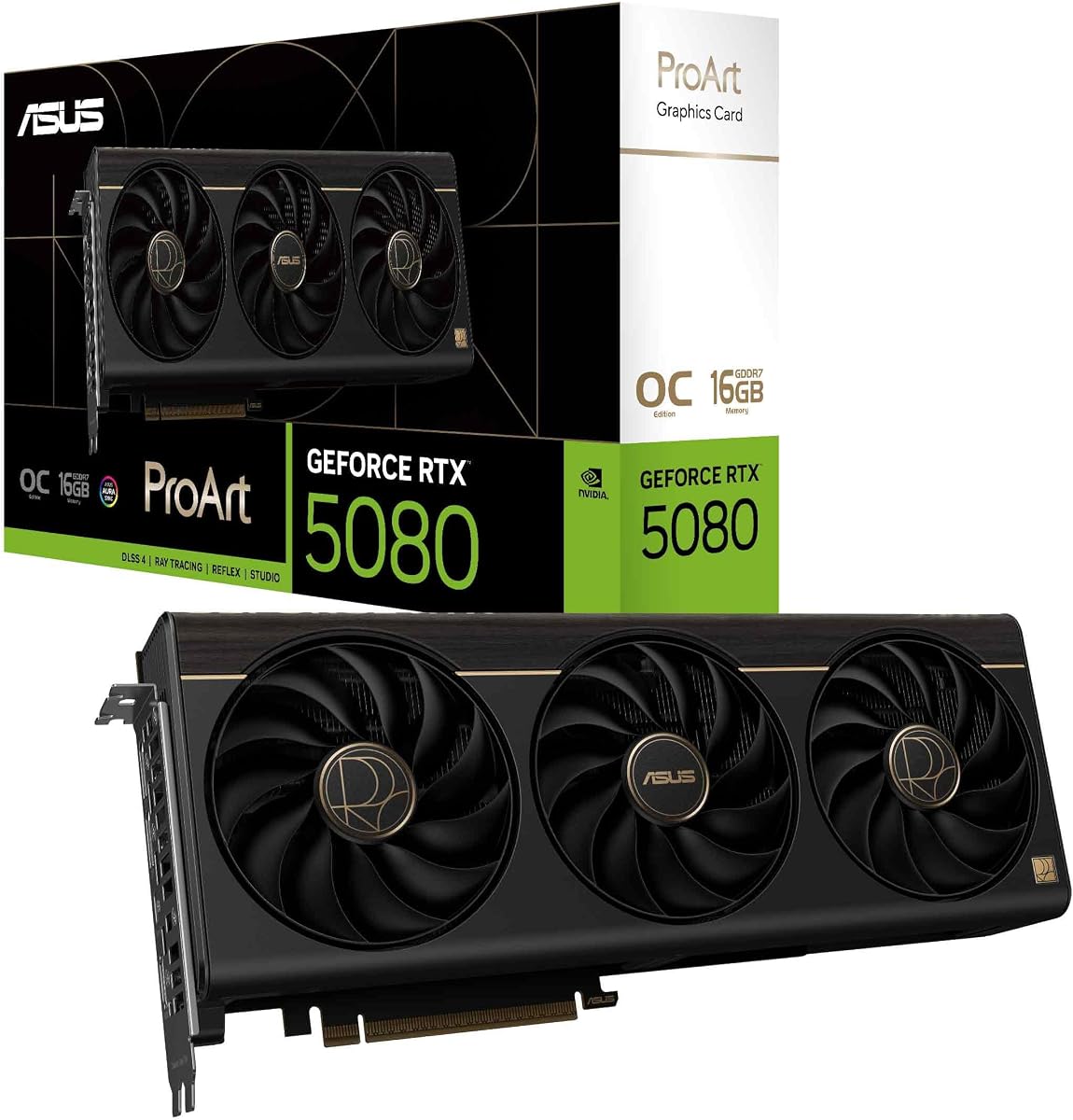
This card is designed with professional creators in mind. It holds the highest rating in this list and is recognized for its refined build quality and high AI performance metrics.
We may earn a commission when you buy through this link, at no additional cost to you.
Key strengths include the MaxContact heatsink which ensures efficient cooling in quiet environments. The integrated USB Type-C port adds versatility for connecting high-speed peripherals directly.
The main trade-off is the price premium associated with the ProArt branding. It may cost more than equivalent gaming cards while offering similar raw performance.
For studios prioritizing aesthetics and reliability this is a top recommendation. It is ideal for designers and editors who value a clean, professional-looking workstation setup.
The MaxContact design increases contact area with the chip allowing heat to dissipate more effectively.
Design elements like the wood-pattern trim reflect a focus on professional aesthetics for creative studios.
We may earn a commission when you buy through this link, at no additional cost to you.
This card offers a balance of performance and compact size. It has a high rating and is designed for users needing powerful GPU in a smaller physical footprint.
We may earn a commission when you buy through this link, at no additional cost to you.
Its key strength is the 2.5-slot design which allows it to fit in smaller chassis while still delivering solid AI performance metrics. The axial-tech fan design ensures efficient airflow.
The trade-off is that it lacks the raw processing power of the higher-end models. It is better suited for 4K workflows rather than demanding 8K projects.
For users with space constraints this is a practical recommendation. It is ideal for budget builds or compact workstations requiring reliable acceleration for everyday editing.
The 2.5-slot design allows installation in compact cases without compromising on cooling capacity significantly.
0dB technology stops fans when under low load ensuring silent operation during light editing tasks.
We may earn a commission when you buy through this link, at no additional cost to you.
Selecting the right graphics processing unit requires understanding your specific workflow demands and budget. We break down the essential factors to consider before making a purchase.
Video memory or VRAM is critical for handling high-resolution footage and complex effects without stuttering. For 4K editing 16GB is often the minimum recommendation while 8K workflows benefit from 24GB or more.
Aim for higher capacity if you work with large textures or multi-layered timelines to avoid performance bottlenecks.
The GPU architecture determines support for the latest features and efficiency. Newer architectures like Blackwell offer better performance per watt and improved AI capabilities for effects processing.
Choosing a current generation card ensures your workstation remains viable for longer as software updates introduce new requirements.
High-performance cards often require significant power and proper cooling. Check your power supply unit to ensure it meets the wattage and connector requirements of the chosen graphics card.
Investing in a high-quality PSU prevents instability and potential hardware damage during intense rendering tasks.
Some applications are optimized for specific hardware ecosystems like NVIDIA CUDA. Verify that your chosen GPU has certified drivers for the versions of Davinci Resolve you intend to use.
Compatible drivers ensure stability and access to all features offered by the software.
Effective cooling is essential for maintaining performance during long export sessions. Look for cards with robust cooling systems that prevent thermal throttling under heavy loads.
Proper airflow in your case complements the card’s cooling to keep temperatures within safe limits.
Graphics cards vary in length and thickness which may not fit all chassis. Measure your case’s available space to ensure a proper fit without obstructing other components.
Consider compact models if you are working within a small form factor workstation build.
Modern editing software relies heavily on AI for features like noise reduction and auto color correction. Dedicated tensor cores accelerate these tasks significantly reducing wait times.
Prioritize cards with strong AI metrics if you frequently use these intelligent tools in your workflow.
Selecting hardware with modern interfaces like PCIe 5.0 helps ensure longevity. This provides higher bandwidth for data transfer which supports upcoming software features.
Investing in future-ready interfaces protects your budget by delaying the need for another upgrade soon.
Ensure your system drivers are updated regularly to maintain compatibility with the latest software features. Keeping drivers current can also fix bugs and improve performance stability over time.
Monitor temperatures during heavy rendering tasks to ensure your cooling system is functioning correctly. Clean dust filters and fans periodically to prevent overheating which can reduce component lifespan.
Configure your project settings to match your hardware capabilities. Adjust render cache formats and GPU acceleration settings within the software to optimize playback smoothness.
For most editors a high-end gaming card is sufficient and often more cost-effective. Workstation cards offer certified drivers for stability which benefits enterprise environments or 3D workloads.
For smooth 8K editing it is recommended to have at least 24GB of VRAM. This allows you to store more frames and effects in memory without swapping to slower system RAM.
Yes Davinci Resolve uses CUDA cores for many effects and rendering tasks. NVIDIA cards generally have broader support for these features compared to other GPU ecosystems.
Davinci Resolve primarily utilizes a single GPU for timeline performance. However having a powerful second card might help with specific render tasks depending on your software version.
If video memory is exceeded the system will use system RAM which is slower. This results in playback stuttering and longer render times during editing sessions.
Yes installing studio or professional certified drivers is often recommended. These versions are tested for stability with creative applications compared to standard gaming drivers.
We reviewed ten options ranging from budget-friendly choices to premium workstation solutions. The GIGABYTE RTX 5080 and ASRock Radeon AI PRO stood out for balancing performance and capacity.
Prioritize memory capacity and thermal design when planning your build. Ensuring your power supply and case can support the chosen hardware is just as important as the performance specs.
Remember that pricing and availability change frequently. Always check current listings to find the best value for your specific editing needs before finalizing your purchase.