
Portable UHF VHF Counter
4.1Editor score
Affordable entry price
Simple button control
Compact lightweight build
This guide compares the best frequency counter for ham radio to help operators measure signal parameters accurately and maintain reliable amateur radio
Operators need reliable tools to measure signal parameters accurately. A good frequency counter provides precise readings essential for maintaining clear communications across amateur bands.
We analyzed real products based on accuracy range and usability. This list covers top models suitable for field use and bench testing by enthusiasts.
Each pick highlights key strengths and ideal use cases. Prices vary by retailer so check current listings before purchasing your next testing device.
4.1Editor score

4.1Editor score

5.0Editor score
The following table provides a side by side comparison of all ten products evaluated in this guide for easy reference.


The Surecom SF401 Plus stands out as a versatile tool for measuring continuous carrier signals across ham bands. It holds a solid rating for reliability and ease of use in the field.
We may earn a commission when you buy through this link, at no additional cost to you.
Its TCXO ensures stable measurements even with temperature changes. The signal strength indicator helps verify transmission quality quickly during testing.
While not suitable for wide bandwidth signals it covers the essential bands. Users must avoid direct antenna output to prevent damage to the meter.
This unit is ideal for maintenance personnel and wireless enthusiasts. It balances portability with precision making it a top recommendation.
Temperature compensation keeps accuracy high across varying conditions.
Antennas and adapter simplify setup for immediate field use.
We may earn a commission when you buy through this link, at no additional cost to you.
This version offers similar capabilities with a focus on ease of use. It supports measuring frequency of two way radios efficiently.
We may earn a commission when you buy through this link, at no additional cost to you.
Operators can choose ranges that match their equipment needs. The design prioritizes portability for on site testing scenarios.
It is not designed for wide bandwidth analysis. Direct antenna connections should be avoided to protect internal components.
Wireless enthusiasts find this tool valuable for basic signal checks. Its compact nature makes it easy to carry anywhere.
Simple button layout reduces learning time for new users.
Selecting the right band ensures accurate reading.
We may earn a commission when you buy through this link, at no additional cost to you.
The FC-2800M is designed for identifying frequency in continuous carrier signals. It is useful for CB and amateur radio applications.
We may earn a commission when you buy through this link, at no additional cost to you.
It includes a DCS CTCSS decoder and high accuracy crystal base. This ensures precise measurements for DMR radio frequency needs.
Users must be aware of the specific range options available. The warranty provides extra confidence for a no risk purchase.
Enthusiasts needing DMR support will appreciate this device. It combines handy operation with reliable performance.
Built in CTCSS DCS support simplifies complex signal checks.
High accuracy crystal reduces long term drift significantly.
We may earn a commission when you buy through this link, at no additional cost to you.
This analyzer expands capabilities beyond simple counting. It provides detailed RF testing for MF HF VHF and UHF bands.
We may earn a commission when you buy through this link, at no additional cost to you.
Users can view up to 290 scan points on the display. USB control allows for extended analysis on a PC.
It includes internal calibration sources for self testing. The kit comes with cables and antenna for immediate use.
Advanced users will value the flexible resolution bandwidth options. It serves well for bench and field antenna testing.
Internal source supports self-test and low input calibration.
Color display shows signals points clearly for analysis.
We may earn a commission when you buy through this link, at no additional cost to you.
This handheld counter offers a straightforward solution for specific bands. It focuses on VHF and UHF testing needs.
We may earn a commission when you buy through this link, at no additional cost to you.
One button control simplifies the testing process significantly. It is equipped with a 9V battery and antenna.
Measurements work best within a one meter range. Users should avoid excessive signal levels during testing.
Budget conscious operators will find this unit useful. It is easy to carry and use on the go.
Single button reduces complexity for quick checks.
Small dimensions make it easy to fit in bags.
We may earn a commission when you buy through this link, at no additional cost to you.
This portable counter is an upgrade designed for two way radio maintenance. It measures frequency and signal strength effectively.
We may earn a commission when you buy through this link, at no additional cost to you.
Users can select ranges covering most common frequencies. The control layout remains intuitive for quick adjustments.
It is not suitable for very wide bandwidth signals. Direct antenna contact should be avoided to prevent damage.
Wireless enthusiasts find it a practical choice. Its size allows it to be carried anywhere easily.
Designed for testing signal strength and frequency accurately.
Includes the most common frequencies for radios.
We may earn a commission when you buy through this link, at no additional cost to you.
This model is a choice for testing frequency and signal strength. It covers areas like 2m Ham radio and VHF UHF.
We may earn a commission when you buy through this link, at no additional cost to you.
It features TCXO for stable accuracy across temperatures. The display shows battery level for operational awareness.
Users must respect the max input signal limits. Direct antenna access can damage the meter internally.
Maintenance personnel appreciate its reliability. It supports DMR radio signals for modern testing needs.
TCXO ensures readings stay accurate in heat or cold.
Built-in gauge helps avoid unexpected power loss.
We may earn a commission when you buy through this link, at no additional cost to you.
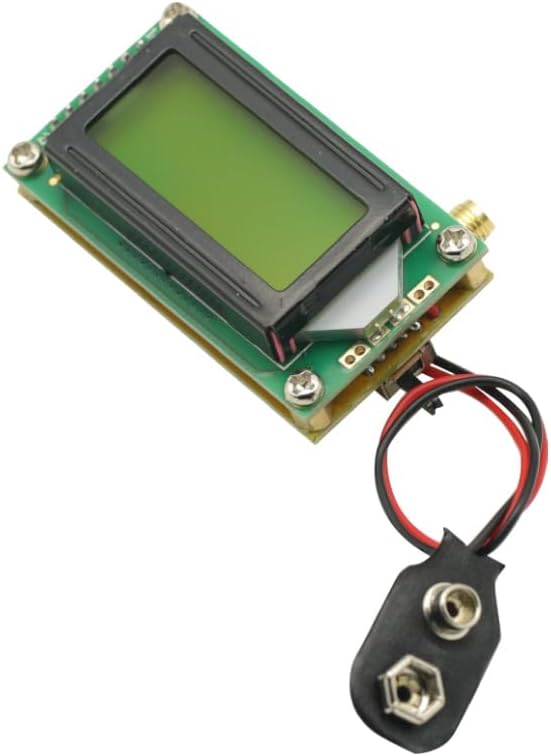
This module targets enthusiasts building their own test tools. It offers a frequency counter function for radio testing.
We may earn a commission when you buy through this link, at no additional cost to you.
It supports frequencies up to 500 MHz with digital display. The PCB material is standard for DIY electronics.
Accuracy may not match higher end units. It is best suited for rough estimates and hobby projects.
Users can integrate it into larger circuits. It is a useful component for custom RF test setups.
Ideal for building personalized testing equipment.
Digital readout provides clear frequency numbers.
We may earn a commission when you buy through this link, at no additional cost to you.
This board provides basic counting functionality for ham radio kits. It covers a frequency range of 1 to 500 MHz.
We may earn a commission when you buy through this link, at no additional cost to you.
Low power consumption ensures longer operation time. The LCD display offers clear readings for testing.
It is designed for new kits and projects. Accuracy may not be sufficient for precise calibration tasks.
Users should handle the board carefully. It fits well into custom housing or enclosure builds.
Brand new board for immediate project integration.
Low consumption extends battery life in setups.
We may earn a commission when you buy through this link, at no additional cost to you.
The TinyGTC offers high-precision dual-channel frequency measurement. It is ideal for calibration SDR tuning and RF testing.
We may earn a commission when you buy through this link, at no additional cost to you.
A built-in GPS disciplined oscillator ensures excellent long-term stability. The 40ps resolution allows accurate phase and time measurements.
It supports real-time charting and data logging on the device. Users can export data for deep analysis.
Professionals and advanced hobbyists benefit most from this tool. Its portability suits field work and bench testing.
GPSDO locks to satellite for precise calibration.
SD card and USB support long measurements.
We may earn a commission when you buy through this link, at no additional cost to you.
Selecting the right frequency counter depends on your operating bands and required accuracy. Consider these factors before buying a new device.
Ensure the device covers all amateur bands you use. Basic models might limit to VHF or UHF while others span HF to microwave.
Choose a range that matches your primary equipment needs.
Look for TCXO or GPSDO features to ensure readings stay accurate across temperatures. High stability prevents drift during critical checks.
Stable time base reduces errors in signal calibration.
Verify if the meter supports continuous wave or digital modes. Some units handle DMR signals while others only measure standard transmissions.
Matching signal types ensures you can measure your specific radio properly.
A clear LCD or touchscreen improves readability in field conditions. Look for backlighting or color displays if operating at night.
Readable interfaces reduce mistakes during testing.
Consider the physical size and weight if you carry it to remote locations. Compact handheld designs are easier to transport than benchtop units.
Small form factor aids field maintenance.
Long lasting power sources are essential for extended testing sessions. Rechargeable batteries or standard 9V options offer flexibility.
Power independence keeps you working longer without outlets.
USB or PC control enables data logging and remote adjustments. Check compatibility with your existing operating systems.
Connectivity options help automate your workflow.
Build quality matters for tools used outdoors or in rough environments. A warranty can protect your investment against defects.
Robust construction ensures reliability over time.
To begin, connect the counter to a stable power source or battery. Ensure it is powered on before making any measurements.
Set the range to match the expected signal frequency. Avoid exceeding the maximum input limits to prevent internal damage.
After use, store the device in a dry place. Regular cleaning of the display and connectors maintains performance.
Most units cover VHF and UHF bands starting at 27MHz and going up to 3GHz. Some specialized models include HF down to 1MHz or go up to 7GHz.
TCXO is highly recommended for stable accuracy across temperatures. Without it readings may drift significantly in hot or cold environments.
Some advanced models support DMR digital signals while others only measure continuous carrier waves. Check specifications before purchase.
Avoid connecting directly to radio antennas without an attenuator. Always respect maximum input voltage limits to prevent permanent damage.
Yes handheld devices are designed for portability and easy transport. They are ideal for on site testing and maintenance.
Most come with basic antennas and a power adapter. Check listings for specific cables or mounting options.
Higher end models support USB logging or data export. Basic units may only show real-time readings without storage.
Battery life varies by model but portable units typically offer several hours. Using rechargeable batteries extends usage between charges.
The Surecom SF401 Plus leads as a versatile option for most operators. Budget users may prefer the handheld VHF UHF counters.
Prioritize accuracy stability range when comparing models. High precision devices like TinyGTC are essential for professional calibration.
Always verify the current specs and compatibility before buying. Prices fluctuate so check listings regularly for deals.