
PreSonus Eris E4.5
4.5Editor score
50W Class AB amplification
Front panel headphone output
Acoustic tuning controls
Finding the right Edm Studio Monitor is crucial for any music producer or audio enthusiast looking for accurate sound reproduction. These speakers provide the clarity needed to mix tracks effectively without coloration or distortion in your listening environment.
We have evaluated ten leading models based on their frequency response, power output, connectivity options, and overall build quality. Our analysis focuses on how each monitor performs in real-world studio setups ranging from small home desks to larger professional rooms.
Each pick in this list highlights specific strengths and ideal use cases to help you make an informed decision. Please note that product availability and pricing can change frequently so verify details before finalizing your purchase decision today.
4.5Editor score

4.8Editor score

4.6Editor score
As an Amazon Associate we earn from qualifying purchases.
The following comparison table provides a side-by-side overview of the top ten Edm Studio Monitor models available this year highlighting their key specifications and core features for easy evaluation.


The Yamaha HS5 stands out as a top choice for producers needing reliable monitoring. It offers a flat frequency response that ensures your mixes translate well across different systems.
We may earn a commission when you buy through this link, at no additional cost to you.
Its bi-amped design delivers 70 watts of power ensuring clean sound even at higher volumes. The 5 inch woofer and 1 inch dome tweeter work together to provide clear highs and solid mids.
While it may lack the deep low end of larger monitors it remains accurate for critical listening tasks. The white cone design is iconic and helps distinguish it on a desk.
If you prioritize sonic purity and brand reliability this model is an excellent investment for any studio setup.
The HS5 emphasizes pure sound without alteration which is vital for professional mixing and mastering workflows.
Multiple input options allow you to connect various audio sources including interfaces and mixers with ease.
We may earn a commission when you buy through this link, at no additional cost to you.
The PreSonus Eris E4.5 delivers studio-quality sound at an entry-level price point. It is perfect for home studios or producers just starting out in music production.
We may earn a commission when you buy through this link, at no additional cost to you.
Its woven-composite woofers provide tight bass that you can feel despite the smaller size. The acoustic tuning controls let you adjust for your specific room acoustics.
You might find the bass less powerful than larger models but the clarity is impressive for the cost. The front headphone output adds convenience for quick checks.
This monitor is an ideal choice for those needing accurate sound without breaking the bank.
Despite its small footprint it packs enough volume and clarity for near field monitoring needs.
Tuning controls allow you to tailor the sound to fit your specific listening environment.
We may earn a commission when you buy through this link, at no additional cost to you.
The Yamaha HS8 offers the low-frequency extension needed for full-range mixing in professional environments. It features an 8-inch cone woofer that handles deep bass with precision.
We may earn a commission when you buy through this link, at no additional cost to you.
Its 120-watt bi-amp system ensures the sound remains clean even when pushed to loud levels. The advanced magnetic circuit design contributes to accurate reproduction across the spectrum.
While it requires more space and budget than smaller units the performance justifies the investment for serious producers. It pairs well with other Yamaha studio gear.
Choose this model if you need extended bass response and maximum power for larger rooms.
The larger woofer allows you to hear sub-bass frequencies that smaller monitors often miss.
High wattage ensures you can fill a room with sound without distortion or compression.
We may earn a commission when you buy through this link, at no additional cost to you.
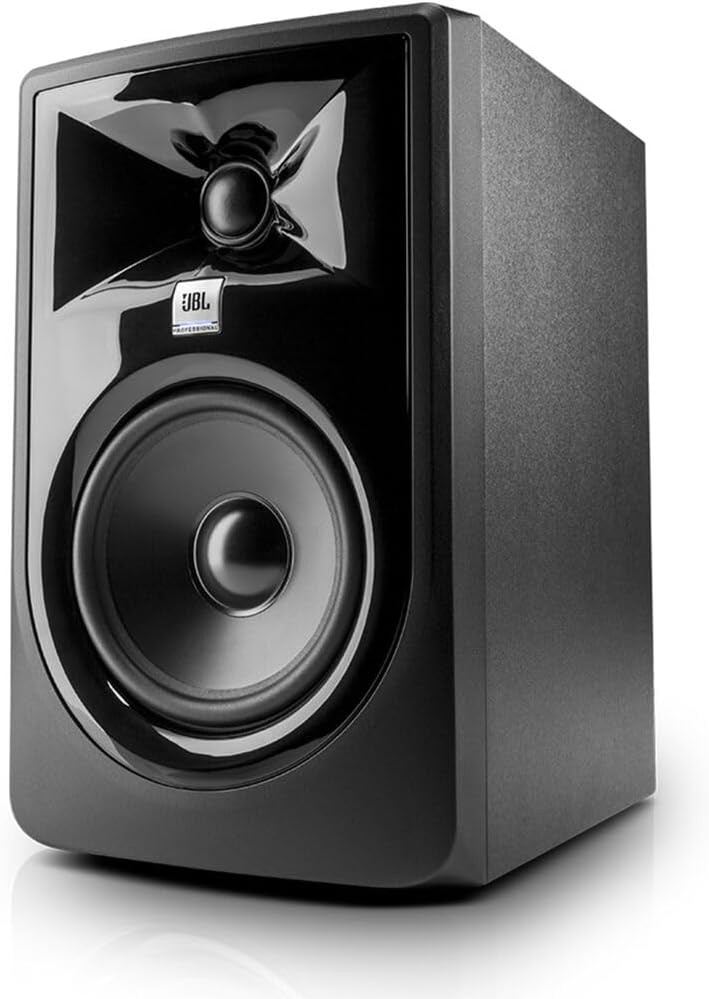
The JBL 305P MkII is known for its wide sweet spot and detailed imaging. It uses a patented Image Control Waveguide to deliver precise sound for music production and podcasting.
We may earn a commission when you buy through this link, at no additional cost to you.
Its Class-D amplification provides 82 watts of power for dynamic range and deep bass. Boundary EQ helps tailor the sound to your room placement for accurate mixes.
Some users note a slightly warm tone but the overall clarity is excellent for the price. The robust MDF enclosure ensures longevity in daily use.
This monitor is a strong contender for producers needing clear imaging on a budget.
The waveguide design ensures stereo imaging remains clear from almost any listening angle.
Built-in EQ controls let you adjust to placement against walls or corners easily.
We may earn a commission when you buy through this link, at no additional cost to you.
The Edifier MR3 offers Hi-Res Audio certification for precise monitoring across a wide frequency range. It includes Bluetooth for wireless streaming alongside balanced inputs for studio gear.
We may earn a commission when you buy through this link, at no additional cost to you.
Its customizable sound modes and app control let you fine-tune output to your preferences. The compact design fits well in smaller home setups without sacrificing clarity.
While it lacks the power of larger monitors it delivers excellent detail for casual listening and basic production. The app adds value by enabling detailed EQ adjustments.
Consider this if you need versatile connectivity and Hi-Res support on a budget.
Certified for high-resolution playback it ensures you hear every detail in your tracks.
The companion app allows for deep customization of the sound profile to suit your taste.
We may earn a commission when you buy through this link, at no additional cost to you.
The PreSonus Eris E7 XT features a large woofer and innovative EBM waveguide for solid imaging and deep lows. It includes acoustic tuning knobs to tailor sound to your space.
We may earn a commission when you buy through this link, at no additional cost to you.
Its woven composite woofer provides accurate lows while the silk-dome tweeter ensures smooth highs. The included Studio One software suite adds value for producers starting their workflow.
While it is sold as a single unit the quality justifies pairing it with another for stereo use. The acoustic space control helps manage low end near walls.
Choose this model if you want larger drivers and waveguide technology for better imaging.
The EBM waveguide expands the sweet spot allowing consistent sound from various angles.
Adjustable knobs let you customize frequency response to match your room acoustics perfectly.
We may earn a commission when you buy through this link, at no additional cost to you.
The Ortizan C7 provides clear and precise sound ideal for accurate audio monitoring on a tight budget. It includes a 24-bit DAC to minimize signal loss and maximize fidelity.
We may earn a commission when you buy through this link, at no additional cost to you.
Balanced inputs allow connection to professional gear while Bluetooth supports wireless streaming. Its carbon fiber speaker and silk dome tweeter deliver a layered sound performance.
While it is not a professional studio reference it offers impressive clarity for its price. The balanced input makes it suitable for small production systems.
This monitor is a great option for those needing basic monitoring without overspending.
TRS balanced inputs allow for noise-free connection to mixers and audio interfaces.
Bluetooth 5.3 enables stable wireless connections for casual listening during breaks.
We may earn a commission when you buy through this link, at no additional cost to you.
The Kali Audio LP-6 V2 features a robust DSP system for a flat frequency response that ensures accuracy. It delivers 80 watts of power for high SPL without distortion.
We may earn a commission when you buy through this link, at no additional cost to you.
Its low-noise port design minimizes chuffing ensuring clean sound even at high volumes. Boundary EQ allows high-quality output regardless of placement on stands or desks.
While it is sold as a single unit the performance is well above its price point. The updated DSP system ensures your mixes are reproduced accurately.
This model is excellent for producers needing high fidelity and SPL on a budget.
The DSP ensures sound is emitted exactly as mixed without unwanted boosts or cuts.
Reduced turbulence in the port means no air noise even when the speakers are loud.
We may earn a commission when you buy through this link, at no additional cost to you.
The Edifier MR5 features a 3-way active crossover system for detailed audio reproduction. It delivers 110W RMS power for loud and clear sound in mid-sized rooms.
We may earn a commission when you buy through this link, at no additional cost to you.
Its LDAC Bluetooth support ensures high-quality wireless streaming. The app-based room compensation allows for advanced acoustic tuning tailored to your space.
While it is more complex to set up than smaller monitors it offers superior sound separation. The MDF cabinets reduce distortion for a cleaner listen.
Consider this if you need professional-grade sound with flexible wireless options.
Separate drivers for low mid and high frequencies ensure accurate detail across the spectrum.
Advanced Bluetooth codec provides near-wireless audio quality for streaming high-res tracks.
We may earn a commission when you buy through this link, at no additional cost to you.
The Mackie CR4.5BT combines studio-quality sound with tone control and Bluetooth for versatile use. It offers transparent response ideal for gaming or production tasks.
We may earn a commission when you buy through this link, at no additional cost to you.
Its tone knob lets you shape sound for bass boost or sparkle. Location switches allow optimization for desktop or bookshelf placement.
While it is slightly less precise than professional monitors it offers great value for multi-use setups. The headphone output adds convenience for private listening.
This monitor is ideal for creators needing one system for work and casual media.
A dedicated knob allows you to adjust bass and treble for different listening scenarios.
Bluetooth and multiple inputs make it suitable for gaming music and content creation.
We may earn a commission when you buy through this link, at no additional cost to you.
Selecting the right studio monitor involves evaluating several technical factors to ensure your mixes translate well across different playback systems.
Driver size affects the low-frequency response of your monitor. Larger drivers such as 8 inches deliver deeper bass while smaller drivers like 4.5 inches focus on clarity and save space.
Choose a size that fits your room and your need for low-end accuracy.
Power output determines how loud your monitors can play without distortion. Look for monitors with sufficient wattage to fill your room cleanly during mixing sessions.
Higher wattage ensures dynamic range and prevents compression at high volumes.
Frequency response indicates the range of frequencies the monitor can reproduce. Flatter responses are generally preferred for mixing to avoid coloring the sound.
Prioritize monitors with flat response for accurate mixing across all frequencies.
Balanced inputs like TRS or XLR reduce noise when connecting to audio interfaces. Ensure your monitors support the connections you need for your gear.
Always prioritize balanced connections for professional audio signal integrity.
Acoustic tuning controls allow you to adjust the sound to fit your room. Look for monitors with knobs for high or low frequency adjustments.
Utilize room controls to compensate for acoustic issues in your studio space.
Amplifier class influences power efficiency and heat. Class AB amplifiers provide warmth while Class D offers efficiency and compact design.
Select a class that matches your performance and efficiency needs.
Solid cabinets reduce resonance and improve sound accuracy. MDF or wood enclosures are standard for professional studio monitors.
Look for sturdy build materials to ensure consistent sound output.
Position your monitors at ear level and form an equilateral triangle with your listening position for optimal stereo imaging.
Use balanced cables to connect your monitors to your interface and minimize background noise or interference.
Keep your monitors away from walls and corners to reduce bass buildup unless using acoustic tuning controls.
The best size depends on your room. For small rooms 5 inches are ideal. For larger spaces 7 or 8 inches provide better low-end response for EDM bass.
Studio monitors offer flat frequency response for mixing while regular speakers often color sound. For production monitors are essential for accurate mixing.
Place monitors at ear height angled towards your head. Keep them symmetrical and equidistant from your seat for balanced sound.
Powered monitors have built-in amplifiers for convenience and better matching. Passive monitors require external amps which adds complexity and cost.
Yes but they are designed for accuracy not entertainment. You will hear details you might miss on consumer speakers.
Software helps flatten response but hardware controls are useful. Use both if possible for the most accurate monitoring setup.
The Yamaha HS5 and PreSonus Eris E4.5 offer standout performance for their respective price points.
Focus on flat response and room tuning to ensure your mixes translate accurately to other systems.
Always verify current availability and pricing before purchasing as details may change.