
10 Pack 3 Pins AMS1117-3.3
4.1Editor score
Simple 3-pin linear regulator design
Supports 4.75V to 12V input
Provides reliable 0.8A current output
Discover the top 5V to 3V voltage regulator options for reliable power conversion across microcontrollers, sensors, and embedded systems in this expert guide.
Finding the right 5V to 3V voltage regulator is crucial for powering sensitive electronics like microcontrollers and sensors without risking damage from voltage spikes or instability.
This guide compares ten highly rated regulators ranging from compact buck modules to linear LDOs, evaluating their efficiency, output current capacity, and suitability for various projects.
Each pick highlights key specs and real-world applications to help you choose the perfect regulator for your build, though prices and availability may change over time.
4.1Editor score

4.6Editor score

5.0Editor score
The following table provides a quick side-by-side comparison of all ten regulators featured in this guide, highlighting their input voltage ranges, maximum output currents, and form factors.


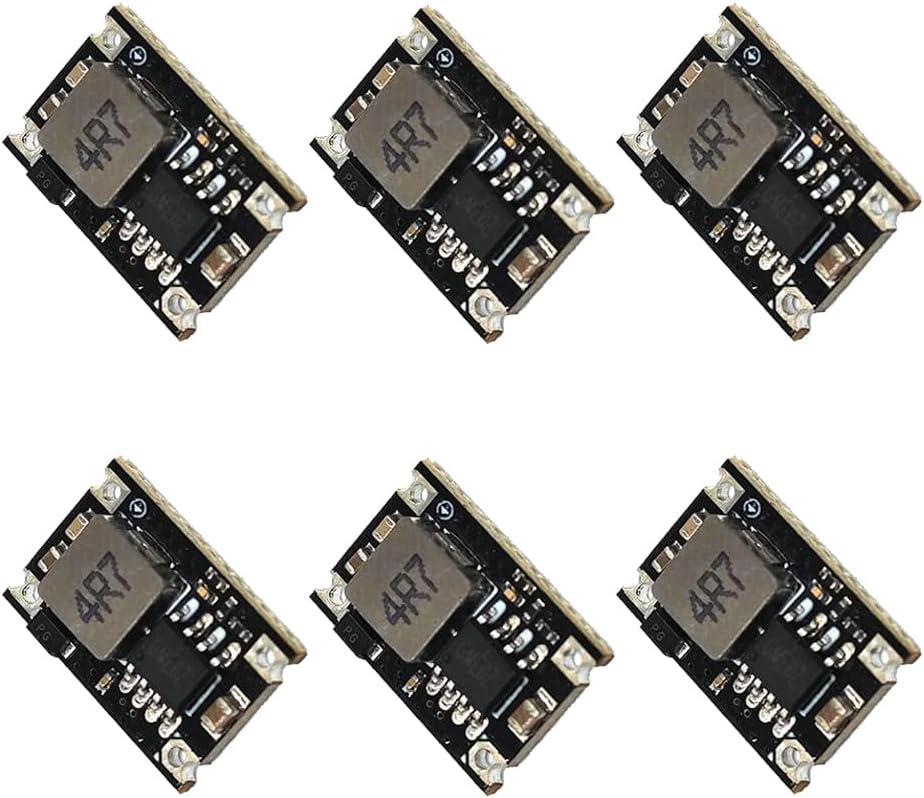
This compact buck converter module stands out as the top choice due to its exceptional input voltage range and stable output performance ideal for diverse applications.
We may earn a commission when you buy through this link, at no additional cost to you.
It delivers a clean 3.3V output with low ripple and supports up to 1.8A current, making it suitable for powering microcontrollers and sensors reliably.
While it requires additional protection components for inductive loads like motors, this is a minor trade-off given its overall versatility and efficiency.
If you need a reliable power solution for multiple projects, this pack offers the best balance of performance size and price for most makers.
The wide input range allows connection to various power supplies like 5V USB or 12V adapters without needing extra conversion.
Switching at 1MHz to 1.5MHz ensures minimal heat generation while maintaining high efficiency compared to linear regulators.
We may earn a commission when you buy through this link, at no additional cost to you.
For budget-conscious projects needing a straightforward solution, this AMS1117-3.3 pack delivers solid performance at an unbeatable price per unit.
We may earn a commission when you buy through this link, at no additional cost to you.
It offers a simple 3-pin interface that works seamlessly with common development boards and supports up to 0.8A current reliably.
Although linear regulators are less efficient and generate more heat than switching modules, this is acceptable for low-power applications.
This option is perfect for students or hobbyists building many simple circuits where cost and simplicity are the main priorities.
Designed to work with popular boards like Arduino UNO and STM32 ensuring easy integration into existing projects.
The overheat shutdown circuit protects your project from damage if the regulator gets too hot during prolonged use.
We may earn a commission when you buy through this link, at no additional cost to you.
This Mini360 buck converter delivers premium performance with extremely low ripple and high efficiency ideal for sensitive electronics and high-demand circuits.
We may earn a commission when you buy through this link, at no additional cost to you.
It supports up to 1.8A current and operates with a switching frequency up to 1.5MHz ensuring clean power even under heavy loads.
The only downside is a modest price premium compared to basic linear regulators but the reliability justifies the cost for critical projects.
Choose this module when you need the highest quality power regulation for professional-grade embedded systems or high-performance microcontrollers.
The low ripple ensures that sensitive components receive stable voltage without noise that could disrupt operation or cause errors.
Despite its tiny size, this module is built to handle significant current and fits easily into tight PCB layouts.
We may earn a commission when you buy through this link, at no additional cost to you.
This unique converter offers both step up and step down functionality making it ideal for battery-powered projects where input voltage varies.
We may earn a commission when you buy through this link, at no additional cost to you.
It handles inputs from 1.8V to 5V and outputs a stable 3.3V ensuring your device runs smoothly even as battery levels drop.
The limitation is a lower current limit of 100mA which restricts it to low-power applications like sensors or simple microcontrollers.
Perfect for portable wearables or battery-operated gadgets where maintaining constant voltage across varying input levels is essential.
Works seamlessly with single-cell or multi-cell batteries adjusting output as voltage fluctuates during discharge cycles.
Designed for minimal power consumption ensuring your battery lasts longer in low-demand scenarios.
We may earn a commission when you buy through this link, at no additional cost to you.
The Dorhea pack provides an affordable and easy-to-use solution for common power needs with a simple 3-pin interface for quick setup.
We may earn a commission when you buy through this link, at no additional cost to you.
Using the proven AMS1117 regulator chip it delivers stable power to microcontrollers and other electronics up to 0.8A current.
While efficiency is moderate compared to switching regulators it is sufficient for most hobbyist and low-power industrial applications.
This pack is ideal for prototyping multiple circuits where simplicity and low cost outweigh high efficiency requirements.
The 3-pin layout reduces wiring complexity and saves space on your breadboard or PCB design.
Ensures your project receives constant voltage even if the input source fluctuates within the supported range.
We may earn a commission when you buy through this link, at no additional cost to you.
With fifteen units in one package this pack offers fantastic value for larger projects or teams needing multiple regulators consistently.
We may earn a commission when you buy through this link, at no additional cost to you.
The low voltage drop feature makes it particularly efficient for battery-powered scenarios where conserving every volt matters.
Its simple plug and play design means no complex wiring or additional components are needed for basic applications.
Choose this option when you need a high quantity of reliable regulators for production or large-scale educational setups.
Buying in bulk reduces per-unit cost significantly ideal for batch production or classroom kits.
Minimizes power loss during voltage conversion extending battery life in portable devices.
We may earn a commission when you buy through this link, at no additional cost to you.
This mini buck board handles a wide input range up to 30V making it versatile for automotive or industrial 24V systems.
We may earn a commission when you buy through this link, at no additional cost to you.
It supports high current output up to 1.8A which is excellent for powering multiple devices simultaneously without overload.
Despite its capabilities some users report mixed reviews likely due to inconsistent quality control or packaging issues.
Use this when your input voltage exceeds standard ranges and you need a compact solution for robust applications.
Safe for use with 12V or 24V power sources where standard 5V regulators would fail.
Extremely small footprint fits into tight enclosures where larger modules cannot be installed.
We may earn a commission when you buy through this link, at no additional cost to you.
This regulator features a broad input range suitable for batteries vehicle power or solar panels ensuring reliable performance across various sources.
We may earn a commission when you buy through this link, at no additional cost to you.
Its compact size and high peak current capability make it ideal for drones or wearables requiring efficient power management.
Users should verify compatibility with specific load requirements before deployment to avoid potential issues with peak demands.
It is a versatile choice for projects needing flexibility in input voltage without sacrificing output stability.
Designed to handle fluctuations in car or truck electrical systems safely.
Provides minimal ripple to protect sensitive electronics from power noise.
We may earn a commission when you buy through this link, at no additional cost to you.
This pack offers ten reliable modules optimized for 5V input sources commonly found in USB and development boards.
We may earn a commission when you buy through this link, at no additional cost to you.
It is designed specifically for low voltage steps and provides consistent 3.3V power for digital logic components.
The limited input range makes it less versatile for higher voltage applications but perfect for standard electronics.
Ideal for makers who already have standard 5V power supplies and need multiple regulators for various small projects.
Optimized for the typical 5V output from USB ports without requiring additional adapters.
Protects your project from current spikes with a solid 800mA limit.
We may earn a commission when you buy through this link, at no additional cost to you.
This Mini360 module is among the smallest options available while still delivering high current output and stable power.
We may earn a commission when you buy through this link, at no additional cost to you.
It works well with aircraft models and robotics where space is tight and reliable voltage regulation is critical.
Adding protection for inductive loads ensures longevity when controlling motors or servos with this module.
Highly recommended for projects needing minimal size without compromising on power delivery performance.
Fits into the tightest spaces for wearable or aerospace applications.
Delivers impressive current capacity from a very small physical package.
We may earn a commission when you buy through this link, at no additional cost to you.
Selecting the right regulator involves considering your input voltage, required output current, efficiency needs, and physical size constraints.
Ensure the regulator accepts your power source voltage comfortably without risking overload or dropout conditions during operation.
Wider input ranges offer flexibility for battery or multi-voltage sources.
Choose a regulator that supports the maximum current your load might draw to prevent overheating or shutdowns.
Always leave a safety margin above your estimated peak current.
Switching regulators offer high efficiency and low heat ideal for battery or high-power use compared to linear regulators.
Linear regulators are simpler but waste more energy as heat especially with large voltage drops.
Sensitive electronics like audio or RF components require low ripple regulators to avoid interference or noise.
Look for specifications indicating ripple below 30mV for clean power.
Consider the module dimensions and mounting options to fit your PCB or enclosure space effectively.
Smaller modules save space but may have higher thermal resistance and lower current limits.
Built-in protection like overcurrent and overheat shutdowns safeguard your project from damage during faults.
These features add reliability and reduce risk of costly component failures.
Identify whether you need step up, step down, or both based on your input and output voltage requirements.
Matching the converter type ensures stable operation across battery discharge cycles.
Multi-pack options often lower the unit cost significantly for bulk projects or prototyping needs.
Balance your budget with necessary quality features to avoid overspending or underperforming parts.
Connect the input pins securely to your power source ensuring polarity is correct to prevent damage or short circuits.
Add appropriate capacitors on both input and output as recommended to stabilize voltage and reduce noise.
Monitor the module temperature during high current use and provide ventilation or heatsinking if necessary to maintain longevity.
Buck regulators are switching devices that offer high efficiency and low heat by rapidly switching power on and off. Linear regulators are simpler and cheaper but dissipate excess voltage as heat making them less efficient for large voltage drops.
Only if the regulator has a fixed or adjustable 3.3V output setting. Standard 5V regulators will output 5V which can damage 3.3V devices. Always verify the output voltage rating before connecting.
Yes most regulators require input and output capacitors to stabilize voltage and prevent oscillations. Refer to the datasheet for recommended values to ensure reliable operation.
Excess heat usually comes from high current draw or low efficiency especially with linear regulators under large voltage differences. Ensure proper heat dissipation and consider switching regulators for high power.
Output ripple refers to the small voltage fluctuations on the output line caused by switching or noise. Low ripple ensures cleaner power for sensitive components like microcontrollers and sensors.
Yes especially switching regulators are ideal for battery power due to high efficiency. Linear regulators work for low-power apps but drain batteries faster due to heat dissipation.
Absolutely these regulators are designed to power common MCUs like Arduino ESP32 and STM32 which operate at 3.3V Ensure current limits match your board requirements.
Add external diodes or capacitors when connecting motors or relays to suppress voltage spikes generated by inductive loads that could damage the regulator.
Whether you need efficiency high current or compact size this guide covers options for every application from hobby to professional use.
Prioritize safety features and current ratings to protect your project and ensure long-term reliable performance across various inputs.
Always verify your current pricing and availability since costs may vary depending on the supplier and market conditions today.