
RC Cellmeter 7
4.7Editor score
Portable Compact Design
Multi Cell Type Support
Clear LCD Display
Lightweight Handheld Unit
Compare top lithium ion battery testers for accuracy and features. Our guide reviews the best models for cars, devices, and more to ensure reliable power.
Choosing the right lithium ion battery tester is crucial for maintaining your devices and vehicles. These tools help you assess battery health accurately. They provide insights into capacity, voltage, and overall performance without guesswork.
We compared leading models based on accuracy, ease of use, and versatility. Our list covers testers for automotive applications and consumer electronics. Each product offers unique features to suit different testing needs effectively.
This guide details the best options available this month. You will see ratings, key specs, and pros and cons. Keep in mind that prices and availability can change frequently over time.
4.7Editor score

4.5Editor score

4.5Editor score
Here is a side by side comparison of all ten selected testers. We highlight key specifications to help you make an informed decision.


The ANCEL BT410 stands out as the top choice for comprehensive battery testing. It earns a high rating for its precision and versatility across various vehicle types. This device handles both 12V and 24V systems with ease.
We may earn a commission when you buy through this link, at no additional cost to you.
Its advanced smart chip ensures testing accuracy exceeds ninety nine point nine percent. The clear color TFT screen provides readable results even in bright sunlight. Users appreciate the QR report feature for sharing data professionally.
While highly accurate, users must ensure they enter the correct battery parameters. The price point is slightly higher than basic testers but justified by the features. It delivers reliable diagnostics for home and professional use.
Buy this if you need a robust tool for multiple vehicles. It simplifies complex diagnostics into clear results. The long cables and protection features make it a safe and efficient choice.
Works seamlessly with both 12V and 24V systems found in cars and trucks.
Generate digital reports for easy sharing with mechanics or for your own records.
We may earn a commission when you buy through this link, at no additional cost to you.
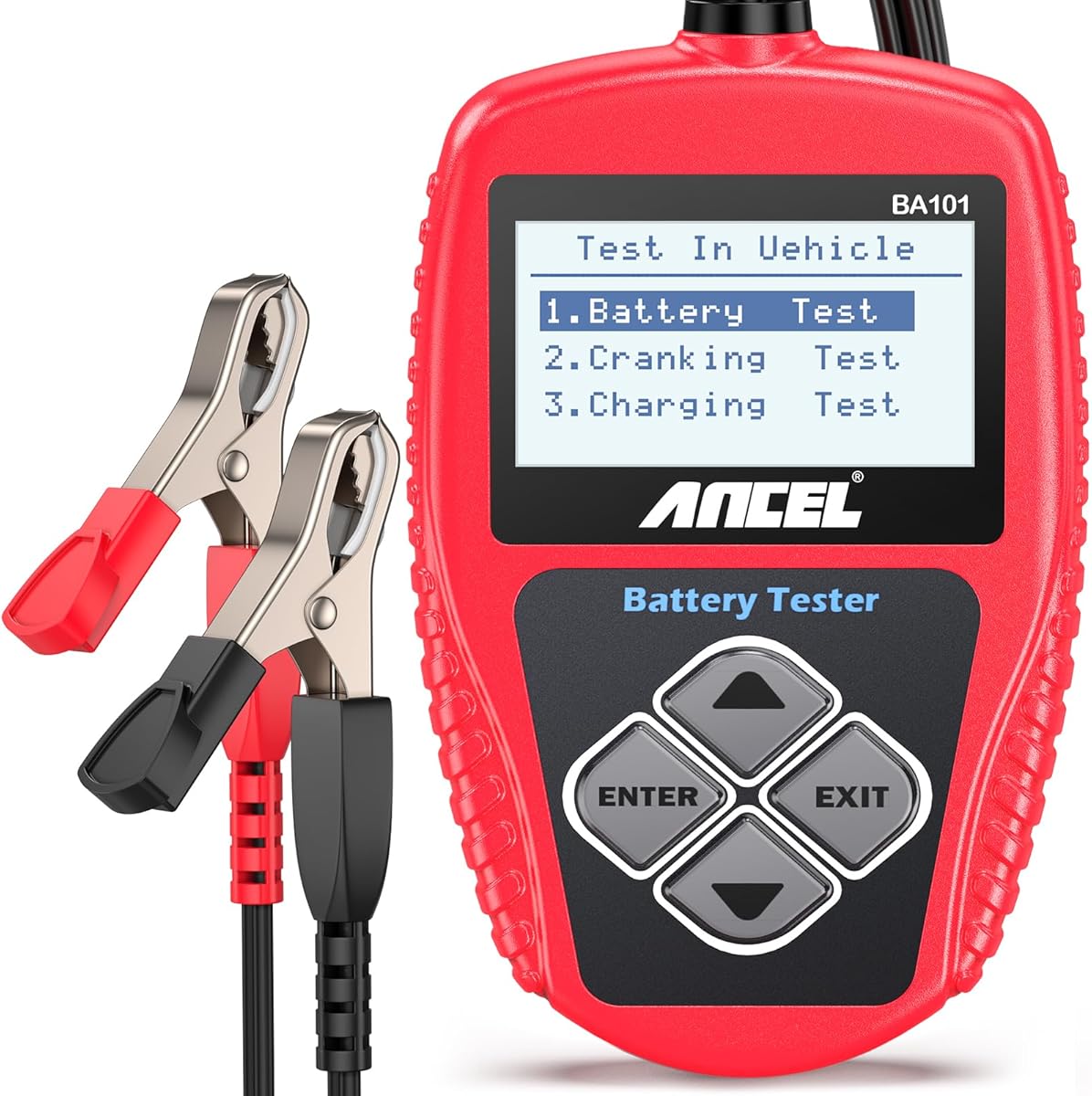
The ANCEL BA101 is a trusted tool for 12V vehicle maintenance. It provides detailed insights into battery health and charging system performance. This model is popular among DIY enthusiasts for its straightforward operation.
We may earn a commission when you buy through this link, at no additional cost to you.
Accuracy is ensured through high quality copper clips and a smart chip. The screen adjusts well to different lighting conditions for clear reading. It covers essential tests like cranking and charging analysis effectively.
Its main limitation is the lack of 24V support. It also does not support lithium batteries directly. For standard 12V lead acid batteries, it remains a cost effective and dependable option.
Select this for routine maintenance of standard cars and trucks. It helps identify weak batteries before they fail. The durability and protection features offer peace of mind during testing.
Recognized by popular YouTube channels for consistent performance in real world tests.
Built with reinforced ABS housing to withstand daily use in garages.
We may earn a commission when you buy through this link, at no additional cost to you.
This module is designed specifically for 18650 lithium ion cells. It offers a detailed look at capacity and internal resistance. This is useful for hobbyists who manage their own battery packs.
We may earn a commission when you buy through this link, at no additional cost to you.
The four channel support allows simultaneous testing of multiple cells. Users can view real time voltage and power data on the screen. It simplifies the process of checking battery health.
Setup can be tricky without the manual. It is not a handheld car tester but a specialized module. For small scale projects, it provides the necessary data without high costs.
Use this for checking flashlight or vape batteries. It helps verify if a battery is performing as expected. The affordable price makes it accessible for many users.
Accurately measures mAh and MWh to confirm actual battery storage capacity.
Test multiple batteries at once to save time on large batches.
We may earn a commission when you buy through this link, at no additional cost to you.
The ANCEL BT310 combines high accuracy with user friendly reporting. It handles both 12V and 24V systems effectively. This makes it suitable for a wide range of automotive applications.
We may earn a commission when you buy through this link, at no additional cost to you.
It uses a precision smart chip to deliver up to 99.98 percent accuracy. The five way result system simplifies interpretation for non experts. The review data function helps track battery health over time.
Inputting exact battery ratings is necessary for best results. The device is larger than basic handheld units. However the robust cables and accuracy compensate for the size.
Buy this if you want to monitor battery trends. It provides reliable data for decision making. The protection features ensure safety during the testing process.
Precision chips ensure readings are highly reliable for critical diagnostics.
Store past test results to compare current performance against previous checks.
We may earn a commission when you buy through this link, at no additional cost to you.
The TOPDON BT100 is designed for simplicity and portability. It fits easily into a glove box for emergency use. The passive testing mode ensures safe connections every time.
We may earn a commission when you buy through this link, at no additional cost to you.
Color LED indicators make results instantly understandable. The menu system is straightforward for quick navigation. It covers standard battery types found in most consumer vehicles.
The design is compact but limits some advanced features. It does not support 24V or lithium systems. For basic checks on standard cars it performs very well.
Ideal for casual users who want a simple tool. It avoids complex readings and offers clear go no go results. The protection features prevent accidental shorts.
Passive testing prevents sparks and shorts for user safety.
LED colors provide instant feedback on battery health without reading numbers.
We may earn a commission when you buy through this link, at no additional cost to you.
The RC Cellmeter 7 is a compact tool for checking small batteries. It supports various types including LiPo and NiMH. This makes it popular for RC hobbyists and drone users.
We may earn a commission when you buy through this link, at no additional cost to you.
It displays total voltage and individual cell levels clearly. This helps identify weak cells within a pack. The device is extremely lightweight and fits in a pocket.
It does not measure capacity or perform load tests. It is strictly for voltage checks. For the price, it offers excellent value for quick assessments.
Perfect for hobbyists managing battery packs. It ensures cells are balanced before use. The simple operation reduces the chance of user error.
Designed for RC and drone enthusiasts to check LiPo and NiMH packs.
Instantly view cell voltage gaps to prevent damage from weak cells.
We may earn a commission when you buy through this link, at no additional cost to you.
The FOXWELL BT705 is built for professional reliability. It handles 12V and 24V systems with consistent results. The long cables allow testing while sitting in the driver seat.
We may earn a commission when you buy through this link, at no additional cost to you.
It features a clear screen with step by step prompts. This simplifies the process for first time users. A hard case protects the unit during transport.
The price is higher than budget models but justified by durability. It may be heavy for occasional use. However it is a strong investment for serious diagnostics.
Choose this for fleet or home shop use. It ensures you do not replace good batteries unnecessarily. The reliability saves money over the long term.
Trusted by professionals and experts for accurate diagnostic results.
Long cables allow you to test without leaving the vehicle seat.
We may earn a commission when you buy through this link, at no additional cost to you.
The BT705Plus is the premium upgrade to the classic model. It offers faster results and a more detailed display. This enhances the testing experience for users needing deeper data.
We may earn a commission when you buy through this link, at no additional cost to you.
It provides comprehensive charge system checks including ripple voltage. The color screen improves visibility outdoors. The speed reduction cuts test time significantly.
Despite the high cost it lacks lithium support for automotive use. It is designed for lead acid systems primarily. The extra cost buys speed and display quality.
Opt for this if speed and clarity are top priorities. It offers the most detailed view of charging systems. The carrying case adds to the premium feel.
Process tests up to 30% faster than the previous BT705 model.
Color LCD makes it easy to read data even in direct sunlight.
We may earn a commission when you buy through this link, at no additional cost to you.
This device targets everyday consumer batteries like AA and AAA. It uses a magnetic slot for easy insertion. This design prevents slippage during testing.
We may earn a commission when you buy through this link, at no additional cost to you.
It is rechargeable via USB-C for convenience. The digital display shows health status clearly. It supports a wide range of common battery sizes.
It does not handle car batteries or load testing. It is strictly for household devices. However it is perfect for checking remotes and toys.
Buy this for household maintenance. It eliminates the need to guess battery life. The rechargeable design reduces waste and cost.
Accommodates most household battery sizes from AA to 9V.
Recharges via USB-C so no extra disposable batteries are needed.
We may earn a commission when you buy through this link, at no additional cost to you.
The La Crosse 911 is a simple tool for home use. It tests common batteries like AA and AAA easily. The slide tray mechanism ensures good contact every time.
We may earn a commission when you buy through this link, at no additional cost to you.
It uses an LED indicator to show battery strength. This avoids confusion from complex numbers. It requires no internal batteries to operate.
It is limited to basic strength checks. It does not offer detailed voltage or health stats. For casual use it is reliable and durable.
Pick this for keeping track of household batteries. It helps avoid leaving devices with dead power. The simple design means it lasts a long time.
Select range, insert battery, and check result in just three actions.
Operates entirely on the battery being tested with no internal power.
We may earn a commission when you buy through this link, at no additional cost to you.
Selecting the right tester depends on your specific needs. Consider voltage range, accuracy, and ease of use before purchasing.
Ensure the tester matches your battery voltage. Most car testers are for 12V, but some support 24V systems. Mismatched ranges can lead to inaccurate results or damage.
Look for dual voltage models if you own trucks or larger vehicles. This ensures versatility across different applications.
Accuracy is key for reliable diagnostics. High precision testers provide consistent results even in varying temperatures. Look for models with smart chips for better data.
Prioritize accuracy over speed if you need professional grade data. Inaccurate readings can lead to unnecessary replacements.
A clear display is essential for reading results easily. Color screens with adjustable contrast help in bright sunlight or dark garages. Backlights are a significant advantage.
Choose a display that shows clear status indicators. This reduces the need to interpret complex numbers manually.
Check if the tester supports your specific battery chemistry. Some devices are designed for lead acid, while others handle lithium ion. Using the wrong mode affects health.
Confirm compatibility with AGM, EFB, or lithium batteries. Versatile testers offer better value for mixed battery needs.
Safety features protect both the tester and the vehicle. Reverse polarity protection prevents damage from accidental connections. Overcurrent protection is also vital.
Ensure the unit has robust safeguards for safe testing. This extends the lifespan of the device and your battery.
User friendly interfaces simplify the testing process. Look for clear steps and straightforward menus. Some models offer guided testing modes.
Opt for testers that provide clear pass or fail results. This helps non experts make decisions quickly.
Long cables allow easier access to batteries in tight spaces. Short cables can make testing difficult without moving the unit. Consider where the battery is located.
Cables of at least 30 inches are ideal for most vehicles. This ensures you can reach terminals without struggle.
A solid warranty indicates manufacturer confidence. Look for at least one year of coverage. Support availability helps resolve technical issues.
Choose brands with good reputations for customer service. This ensures you get help if the device fails.
Start by identifying your battery type and rating. Enter these details accurately into the tester before connecting. This ensures the device applies the correct load tests.
Connect the clamps to the correct terminals. Red for positive and black for negative. Secure the connection firmly to avoid false readings from poor contact.
After testing, clean the clamps and store the unit in a cool place. Avoid dropping the device or exposing it to extreme heat. Proper care extends its life significantly.
Yes, some advanced testers support automotive lithium batteries. However, many car testers are designed for lead acid systems. Always check compatibility before use.
Most automotive testers draw power from the battery being tested. This eliminates the need for internal power sources. Always ensure the vehicle battery is connected.
SOC stands for State of Charge, indicating current power level. SOH stands for State of Health, indicating overall condition. Both are vital for full diagnostics.
High quality handheld testers are very accurate. They typically use smart chips to minimize error. Results are usually reliable for routine maintenance.
Yes, many models include alternator testing features. They check charging voltage and ripple under load. This helps identify problems beyond the battery.
Testing cold batteries is generally safe with modern testers. However, extreme cold can affect readings. Allow the battery to warm up if possible.
The ANCEL BT410 and FOXWELL BT705Plus stand out as top choices. They offer high accuracy and versatile features for various needs. Budget options like the RC Cellmeter are great for smaller applications.
Prioritize features like voltage range and display quality. Ensure the device supports your specific battery types. Safety protection is also a key factor.
Prices and availability can change frequently. Always check current listings before buying. Choose the model that fits your specific testing requirements best.