
Pinhaijing LAN Ethernet 2 Way Relay Board Delay Switch TCP/UDP Controller Module Web Server
4.8Editor score
Affordable entry-level price point
STC microcontroller chip
Simple web server interface
This guide compares the top 10 Ethernet Relay Module options for industrial and home automation, focusing on connectivity, reliability, and ease of integration
Ethernet relay modules are essential components for modern automation systems, allowing remote control of electrical devices through network connections. These devices bridge the gap between digital commands and physical power switching, enabling seamless integration into smart home and industrial setups.
We evaluated ten leading Ethernet relay modules based on protocol support, power options, isolation features, and overall build quality. Our analysis focuses on reliability, ease of configuration, and compatibility with common automation protocols to ensure you select the right hardware for your specific application needs.
Each pick in this list highlights unique strengths, from budget-friendly options to industrial-grade units with advanced connectivity. Please note that product availability and pricing may vary over time, so always check the latest details before making your final purchase decision for your project.
4.8Editor score

4.8Editor score

4.9Editor score
The following table provides a side-by-side comparison of all ten Ethernet relay modules evaluated in this guide, highlighting key specifications and unique features to help you make an informed decision.


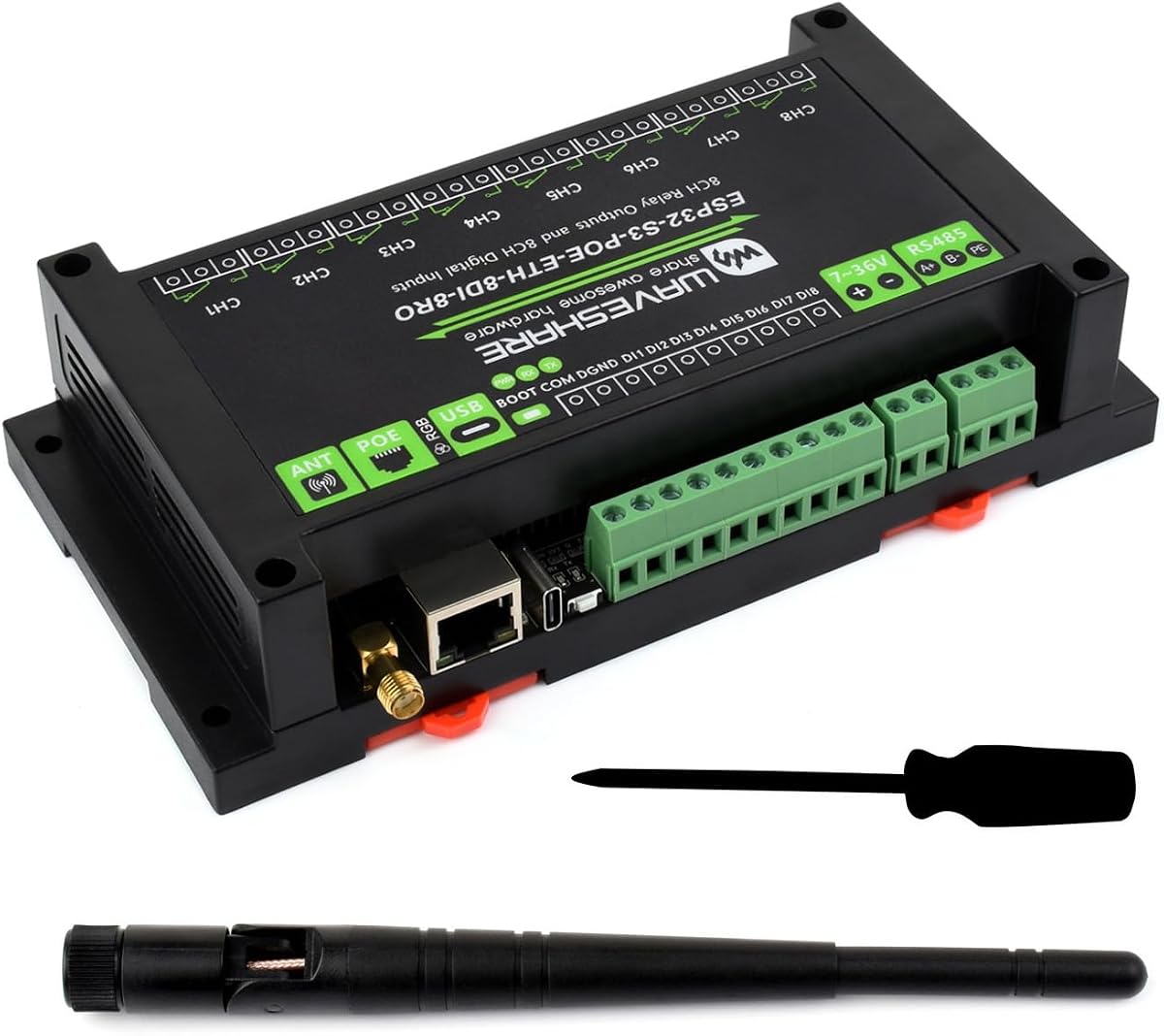

This module is highly rated by users for its robust performance and flexible connectivity options. It stands out with its ESP32-S3 processor, offering powerful processing for complex automation tasks. The inclusion of PoE and wireless protocols makes it a versatile choice for various environments.
We may earn a commission when you buy through this link, at no additional cost to you.
The standout quality of this device is its ability to support multiple communication standards simultaneously. You can use Ethernet for stable control, Wi-Fi for remote access, or RS485 for industrial sensor integration. The onboard digital inputs allow you to monitor external signals alongside controlling relays.
One trade-off is that the unit may require a bit more initial configuration compared to simpler modules. However, the flexibility gained in exchange is worth the extra setup time for most serious users. The power isolation and optocoupler protection ensure safety in high-voltage scenarios.
We recommend this module for users who need a reliable, feature-rich relay controller for industrial or smart home projects. Its ability to handle both wired and wireless protocols makes it an excellent long-term investment for automation needs.
The 32-bit dual-core processor runs at high speeds, allowing for faster response times and more complex logic operations within the module.
With integrated Ethernet, Wi-Fi, Bluetooth, and RS485, this module can interface with almost any modern network or legacy industrial system.
We may earn a commission when you buy through this link, at no additional cost to you.
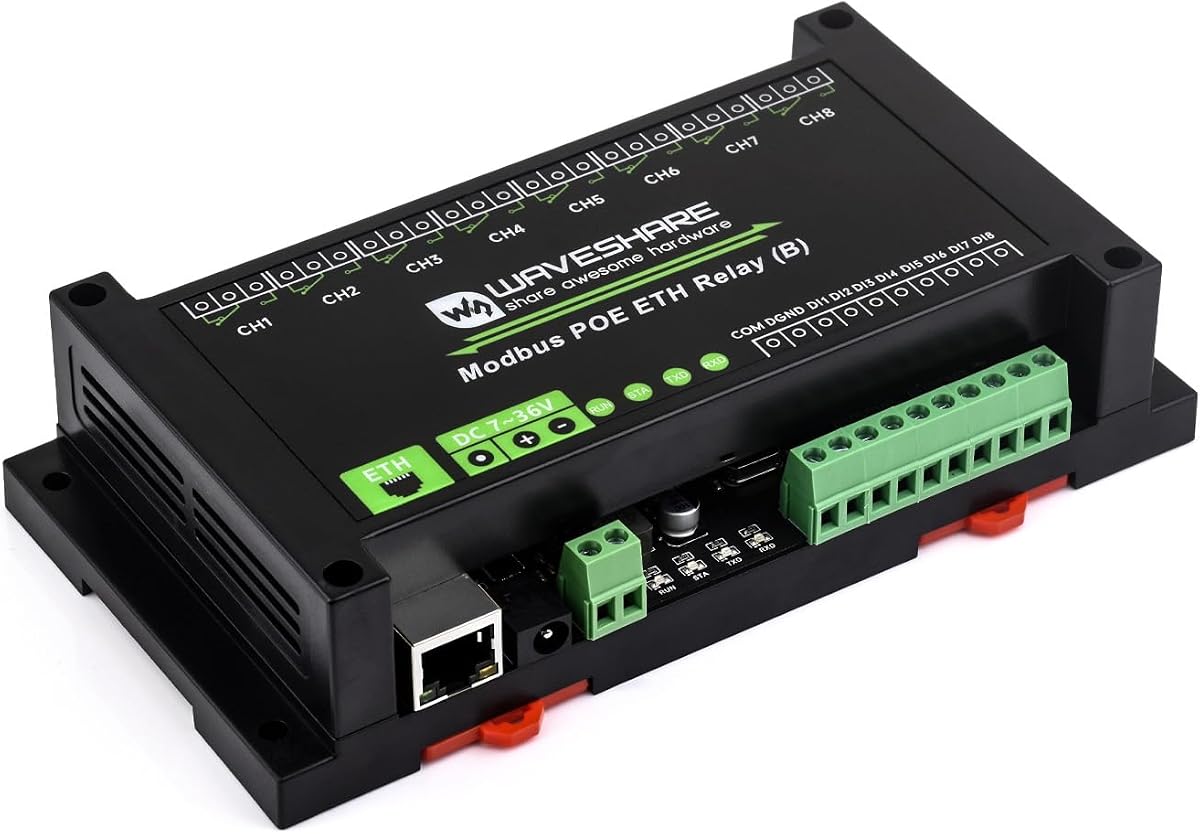
This relay module is designed with industrial applications in mind, featuring a robust case and mounting options. It focuses on reliability and stability, using proven Modbus protocols for communication. Users appreciate the ease of mounting it in standard electrical panels.
We may earn a commission when you buy through this link, at no additional cost to you.
Key strengths include its protection circuits and isolation features that prevent damage from high-voltage interference. The ability to power it via PoE or a wide DC range adds flexibility to installation. Network indicators help quickly diagnose connection issues during setup.
The main limitation is that it lacks the built-in Wi-Fi found in some competitors, requiring an external network connection. However, for stationary industrial setups where wired stability is priority, this is a minor drawback. The flash feature allows for temporary relay control easily.
This product is ideal for facility managers or engineers who need reliable, rack-mountable control for machinery. Its focus on physical protection and standard protocols ensures it fits well into existing industrial automation architectures.
The ABS rail-mount case is designed to withstand harsh environments, protecting the electronics from dust and physical impacts.
You can power the unit directly via Ethernet using PoE or connect a dedicated DC power supply for redundant operation.
We may earn a commission when you buy through this link, at no additional cost to you.
This module offers excellent value for users who need basic Ethernet relay control without advanced features. It uses a simple web server interface for control, which is easy to set up. The high-quality PCB construction ensures longevity even at a low price point.
We may earn a commission when you buy through this link, at no additional cost to you.
Strengths include its compact size and straightforward operation. You can control the relays directly from a browser on your local network. Password protection adds a layer of security for home or small office use. The military-grade PCB materials add durability.
The trade-off is the limited number of channels, which may not suffice for larger projects. Also, it lacks industrial protocols like Modbus for complex integration. However, for simple tasks like lighting control, it performs reliably and efficiently.
We recommend this for hobbyists or small projects where budget is a concern. It is a practical choice for adding basic network control to simple electrical circuits without overcomplicating the setup.
Access the module through any web browser on your local network to switch relays on or off instantly.
The small footprint and thick PCB make it suitable for tight spaces while maintaining structural integrity.
We may earn a commission when you buy through this link, at no additional cost to you.
This model stands out for its exceptional customer ratings, reflecting high reliability and user satisfaction. It supports both Modbus RTU and TCP protocols, making it versatile for different network types. The digital inputs allow you to monitor external devices alongside relay control.
We may earn a commission when you buy through this link, at no additional cost to you.
A key strength is the multiple configuration options, allowing you to set it up via software or a web browser. You can obtain dynamic IPs via DHCP and connect to DNS for domain-based access. This flexibility simplifies network integration for IT professionals.
The trade-off is that setting up DNS and domain connections may require some networking expertise. However, once configured, the unit is very stable and secure. The isolation circuits protect the internal electronics from external electrical noise effectively.
We recommend this for users who prioritize stability and integration capabilities. It is an excellent choice for building robust automation systems where reliable protocol communication is essential.
Choose between software tools or web interfaces to configure network settings, giving you control over your setup process.
Bidirectional optocoupler isolation ensures that high-voltage spikes do not damage the control circuitry.
We may earn a commission when you buy through this link, at no additional cost to you.
This module is built with developers in mind, offering extensive documentation and SDKs for custom applications. It uses the ESP32-S3 microcontroller, which is popular in the maker community for its powerful wireless features. You can easily program custom logic using familiar tools.
We may earn a commission when you buy through this link, at no additional cost to you.
Strengths include the comprehensive resources and technical support provided by the manufacturer. You can find tutorials and examples online to get started quickly. The wireless connectivity is integrated directly, saving you from needing external Wi-Fi modules.
The trade-off is that you may need to write some code to fully utilize the advanced features. However, for those comfortable with programming, this opens up endless possibilities. The hardware is solid and includes necessary isolation for safe operation.
We recommend this for hobbyists and engineers who want to build custom automation solutions. It provides the flexibility to adapt the hardware to specific project needs without being locked into fixed behavior.
Use the official SDK and Arduino IDE to write custom firmware that matches your exact project requirements.
The built-in Wi-Fi and Bluetooth let you control the module wirelessly without additional hardware.
We may earn a commission when you buy through this link, at no additional cost to you.
For projects requiring control of many devices, this module offers a substantial 30 channels in a single unit. It uses dedicated driver chips with protection features to ensure stable operation under heavy loads. This makes it suitable for large farms or industrial facilities.
We may earn a commission when you buy through this link, at no additional cost to you.
Strengths include the ability to handle complex control tasks efficiently. The flyback diode protection helps manage electrical noise generated by switching loads. You can rely on the LED indicators to monitor the status of all channels at a glance.
The main trade-off is the physical size and cost compared to smaller units. However, consolidating 30 channels into one device can save space and cabling complexity in large installations. It simplifies management by centralizing control.
We recommend this for agricultural or industrial managers who need to manage many circuits remotely. It is a scalable solution that grows with your automation needs.
Manage up to 30 separate relays from a single network interface, reducing the need for multiple devices.
Built-in circuit protection ensures that individual channel faults do not compromise the entire system.
We may earn a commission when you buy through this link, at no additional cost to you.
This module adds a Real Time Clock (RTC) chip, allowing you to set scheduled tasks without needing an external computer. It is ideal for applications like lighting or irrigation that need to run on a timer. The high-speed processor ensures these schedules run accurately.
We may earn a commission when you buy through this link, at no additional cost to you.
Key strengths include the modern USB Type-C port for easy power and firmware updates. The isolated RS485 interface adds professional-grade connectivity for industrial environments. Wide voltage input supports flexible power sources.
The trade-off is that the RTC chip requires continuous power to keep time accurate. However, this is standard for reliable timekeeping in standalone devices. The monitoring indicators help you see device status at a glance.
We recommend this for users who need reliable, self-contained automation with time-based triggers. It simplifies operations by removing the need for constant network-dependent scheduling.
Set specific times to activate or deactivate relays using the onboard clock, independent of network status.
The USB Type-C port provides a standard and durable connection for power and debugging.
We may earn a commission when you buy through this link, at no additional cost to you.
This module includes logic features like linkage control, which allows inputs to trigger outputs automatically. It also supports debouncing algorithms to ensure clean signals. These features make it suitable for smart home scenarios where sensors need to trigger devices.
We may earn a commission when you buy through this link, at no additional cost to you.
Strengths include the rail-mount case which simplifies installation in home electrical panels. The flyback diode protection ensures the relays are protected during switching. MQTT support allows integration with home automation hubs like Home Assistant.
The trade-off is that the web interface is functional but basic compared to custom software. However, for standard automation tasks, it is sufficient and reliable. The toggle control allows for easy state changes via commands.
We recommend this for homeowners looking to integrate relay control into a larger smart home ecosystem. It provides the necessary logic and protection for safe, automated operation.
Connect sensors to inputs and have them automatically control relays without external processing.
The debouncing algorithm filters out noise from digital inputs, preventing false triggers.
We may earn a commission when you buy through this link, at no additional cost to you.
This board is excellent for users who prefer simple TCP or UDP command control. It allows you to send basic network commands to switch relays. The status LEDs provide immediate visual feedback on the state of each channel.
We may earn a commission when you buy through this link, at no additional cost to you.
Strengths include its compact size and flexible voltage input options. You can run it on 5V or higher voltages depending on your power source. The delay switch feature allows you to control timing manually if needed.
The trade-off is that it lacks advanced features like scheduling or complex logic. However, for direct, simple control it is highly efficient. The military-grade PCB ensures it handles power surges well.
We recommend this for basic industrial or hobby projects requiring direct network control. It is straightforward and does the job effectively without unnecessary complexity.
Send simple TCP packets to the module to turn relays on or off immediately.
Each relay has a dedicated LED, so you can see its status without checking a computer screen.
We may earn a commission when you buy through this link, at no additional cost to you.
This module is designed to integrate seamlessly into standard networks with DNS and DHCP support. You can connect it to domain names for easier access. The flash function allows for temporary activation of relays by passing specific arguments.
We may earn a commission when you buy through this link, at no additional cost to you.
Strengths include the protection circuits that prevent interference from high-voltage sources. PoE support means you can power and connect it with a single cable. The rail-mount case fits standard industrial panels easily.
The trade-off is that it offers standard features found in many other modules, so it may not stand out. However, it is a solid choice for users who need reliable Modbus communication on a budget. The network indicators help verify connections quickly.
We recommend this for users who want a reliable, standard-compliant module for general automation. It handles network tasks well and provides the necessary safety features for industrial use.
Connect using domain names instead of IP addresses for easier management in larger networks.
Optocoupler isolation ensures safe separation between your network control and high-voltage circuits.
We may earn a commission when you buy through this link, at no additional cost to you.
Selecting the right Ethernet relay module requires understanding your specific power, connectivity, and control needs.
Different modules support different communication standards. Modbus RTU and TCP are common in industrial settings for robust communication. MQTT is popular for IoT applications where lightweight messaging is needed. UDP and HTTP provide simple options for custom scripts.
Choose a protocol that matches your existing network infrastructure and software requirements to ensure seamless integration.
Power is a critical consideration for relay modules. Some units support Power over Ethernet (PoE), which simplifies cabling by providing power and data over one cable. Others require dedicated DC power inputs, typically with a wide voltage range.
Select a module with a power source that fits your wiring capabilities to avoid complex power distribution setups.
The number of relays you need determines the size of the module. Options range from 2-channel units for simple tasks to 30-channel models for large industrial installations. Ensure the module has enough channels for current and future needs.
Matching the channel count to your project prevents overpaying for unused capacity or needing multiple units.
High-voltage circuits can interfere with low-voltage network electronics. Optocoupler isolation creates a barrier between control signals and power circuits to prevent damage. Flyback diodes protect against electrical spikes generated by switching inductive loads.
Always choose a module with adequate isolation features to ensure the longevity and safety of your control system.
Some modules include Wi-Fi or Bluetooth for wireless control, offering flexibility for setups where running Ethernet is difficult. Wireless options are great for remote monitoring but may be less stable than wired connections.
Decide if wireless access is necessary for your application or if a stable wired connection is preferred.
The physical form factor matters for installation. Industrial modules often come with rail-mount cases to fit standard electrical panels. Others may be bare boards requiring a custom enclosure.
Ensure the module's mounting style matches your installation environment to simplify setup and protection.
Modules with digital inputs allow you to monitor external sensors or switches alongside relay control. This is useful for automation logic where input states trigger relay actions automatically.
Check if the module supports the type of inputs you need, such as dry contacts or voltage signals.
Ease of configuration varies by manufacturer. Some offer web interfaces, while others require command-line tools or custom software. Look for available documentation and technical support to help with setup issues.
Prioritize products with clear resources and community support to reduce frustration during the initial setup phase.
To begin using your relay module, connect the Ethernet cable to your router and power it on. Access the configuration interface through a web browser or software tool provided by the manufacturer to set up IP settings and communication parameters.
For industrial applications, ensure that all wiring follows safety guidelines. Use the provided rail-mount case to secure the unit in a controlled environment. Avoid exposing the electronics to moisture or excessive heat to maintain longevity.
Regularly check the network status LEDs to verify connectivity. If you use external sensors, calibrate them according to the module's input specifications. Periodically review logs or status indicators to ensure the system is operating correctly over time.
Modbus RTU is a serial communication protocol often used over physical serial lines, while Modbus TCP runs over Ethernet networks. TCP is easier to integrate into modern networks, whereas RTU is common in older industrial equipment. Choose based on your network environment.
Most modules can be controlled directly from a web browser or standard networking tools without a dedicated controller. However, using a home automation hub or custom software may provide more advanced scheduling features. Check the product manual for compatibility details.
Yes, the relays on these modules are designed to switch standard AC voltages like 250VAC. Ensure you wire the high-voltage side correctly and observe safety precautions to prevent electrical hazards. Isolation helps protect your network side.
No, not all models support PoE. Many industrial models do, but you should verify the specifications before purchasing. If PoE is not supported, you will need to connect a separate power adapter to run the module.
If the module has built-in Wi-Fi, you can usually configure it through a web interface by entering your network credentials. Follow the manufacturer's steps to ensure the device connects securely to your local network for remote access.
Many modules support protocols like MQTT that are compatible with popular smart home platforms like Home Assistant or Node-RED. Check the supported protocols to confirm integration capabilities. You may need to set up a bridge or custom script.
We have reviewed the top Ethernet relay modules available, highlighting their strengths for different use cases. Whether you need industrial durability or simple home automation, there is a model that fits your requirements well.
Prioritize connectivity options and safety features when making your decision. Ensure the module supports the protocols and power methods your project needs to avoid compatibility issues later.
Please check current product availability and pricing before purchasing. Technology evolves quickly, so verifying the latest specs ensures you make the best choice for your automation system today.