
2Pcs Nano V3.0 Board
4.5Editor score
ATmega328P and CH340G Chip
USB-C Power Socket
Fully Compatible with Arduino IDE
This guide compares the top ten Arduino Nano Board options available in October 2026 to help you select the best microcontroller for your specific project
The Arduino Nano Board remains a staple for makers needing a compact yet capable microcontroller. These boards offer powerful processing in a small footprint suitable for wearables and embedded systems.
We evaluated ten distinct Nano variants based on chipset performance connectivity options and community support. Our analysis highlights key differences between classic ATmega models and newer ESP32 or R4 iterations.
Each pick details specific features strengths and ideal use cases for various projects. Please note that availability and pricing may change frequently so verify current details before purchasing.
4.5Editor score
4.6Editor score

4.5Editor score
This side-by-side comparison highlights the unique specifications and capabilities of each Nano variant to help you find the perfect match for your engineering or hobbyist projects.


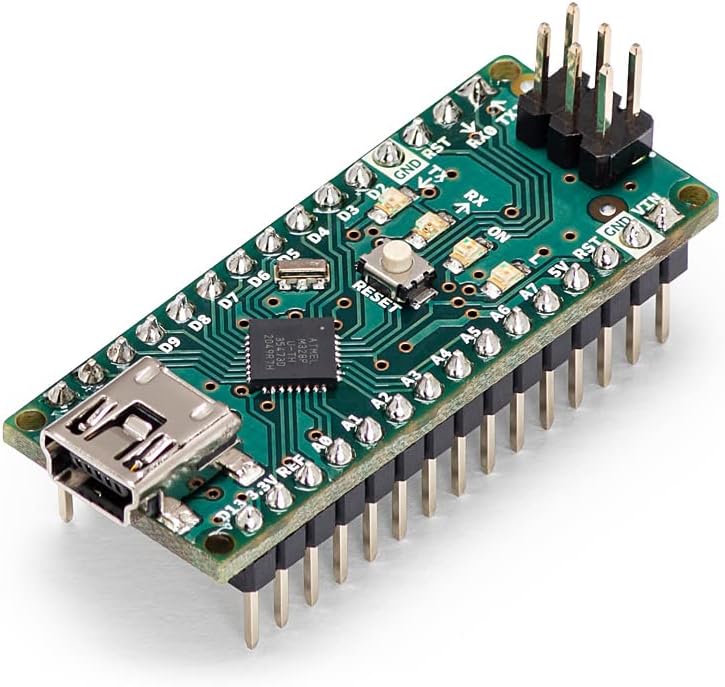
This official Arduino Nano carries a 4.6 rating and stands out for its reliability and robust feature set suitable for both beginners and engineers needing a trusted core for embedded systems.
We may earn a commission when you buy through this link, at no additional cost to you.
Its compact ATmega328P design delivers significant processing power for wearables and robotics. The 14 digital I/O pins and 8 analog inputs allow precise control of sensors motors and LEDs without extra hardware.
While the price is higher than third-party alternatives the official board ensures consistent quality and driver support. This trade-off is acceptable for projects where long-term stability and documentation are critical success factors.
Buyers seeking a dependable microcontroller for industrial or educational use should prioritize this model. It offers the best balance of performance size and ecosystem support available in the current market landscape.
Official boards undergo stricter quality control ensuring fewer connection issues during development.
Thousands of community libraries are optimized for the original Nano architecture.
We may earn a commission when you buy through this link, at no additional cost to you.
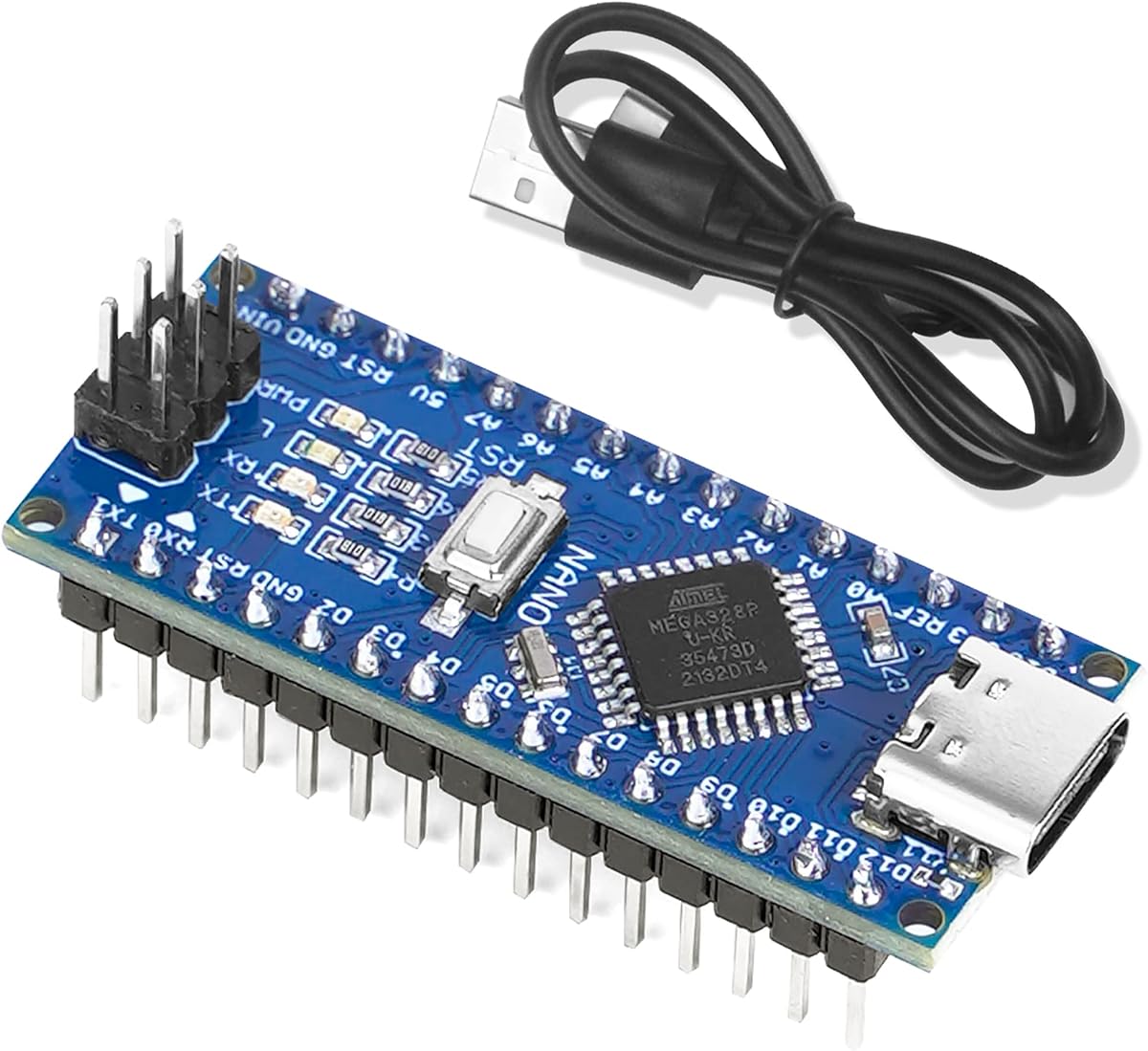
Rated 4.6 this 3-pack offers a cost-effective solution for projects requiring multiple controllers. It uses the ATmega328P and CH340 chip for reliable performance across Windows Mac and Linux environments.
We may earn a commission when you buy through this link, at no additional cost to you.
The board supports ISP download and USB power just like the official version. Its compact size makes it breadboard friendly while maintaining full compatibility with the Arduino IDE for seamless code uploading.
Users may need to install specific CH340 drivers which can be a minor hurdle. However the cost savings and reliability of the CH340G chip over older FT232RL make this a practical choice.
This option is ideal for students or hobbyists needing bulk boards for classroom or multiple prototyping projects. It delivers standard Nano functionality without the premium price tag of official hardware.
CH340 drivers are widely available and easy to install on major operating systems.
Getting three boards in one pack is perfect for group projects or backups.
We may earn a commission when you buy through this link, at no additional cost to you.
This 3-pack features USB-C connectivity and presoldered headers which saves significant time during assembly. The boards run classic 5V 16MHz AVR sketches with 14 digital I/O pins and 8 analog inputs.
We may earn a commission when you buy through this link, at no additional cost to you.
Presoldered headers allow immediate breadboard use without extra assembly work. The USB-C connection provides modern connectivity though it relies on the CH340 chip for USB communication and power supply.
While it lacks wireless features like WiFi or Bluetooth the simplicity and ease of setup are major advantages for wired projects. It is perfect for those who value convenience in the prototyping phase.
Buyers looking for a modern USB-C experience without moving to more complex boards will find this ideal. It bridges the gap between classic performance and current connectivity standards effectively.
Pre-soldered headers eliminate the need for tools and reduce setup time.
USB-C port aligns with current device standards for easier power and data.
We may earn a commission when you buy through this link, at no additional cost to you.
The Nano Every offers enhanced performance through the ATmega4809 microcontroller and larger memory spaces for complex programs. It features 48KB Flash 6KB SRAM and 20 digital I/O pins in a compact 45×18 mm package.
We may earn a commission when you buy through this link, at no additional cost to you.
This board ensures a smooth transition for older projects while offering better efficiency and execution speed. The USB-C port improves connection stability and power delivery compared to legacy micro-USB standards used previously.
Users should note that some older libraries might require slight adjustments for the new architecture. However the improved processing power makes it well worth the effort for advanced embedded applications and automation tasks.
Projects needing more memory or faster processing than the classic Nano can benefit significantly from this upgrade. It is a reliable choice for developers moving from basic to mid-tier embedded system designs.
Increased Flash and SRAM allow running more complex code without external storage.
The newer chip handles tasks more efficiently reducing power consumption overall.
We may earn a commission when you buy through this link, at no additional cost to you.
Powered by the ESP32-S3 chip this board delivers dual-core processing power at up to 240 MHz for advanced embedded applications. It includes integrated Wi-Fi and Bluetooth 5.0 for seamless wireless data transfer and control.
We may earn a commission when you buy through this link, at no additional cost to you.
The USB-C port ensures stable connections and faster programming speeds. Additionally HID support allows you to use the board as a custom input device interfacing directly with computers as a keyboard or mouse.
While it offers more power it also requires familiarity with the ESP32 environment which differs from classic AVR setups. Developers preferring Python will appreciate the MicroPython compatibility for rapid prototyping cycles.
Smart home systems wearable tech and remote sensors are perfect use cases for this model. It transforms the Nano footprint into a connected device capable of handling modern IoT demands effectively.
Built-in Wi-Fi and Bluetooth simplify remote monitoring and control projects.
MicroPython support makes coding more accessible for educators and students.
We may earn a commission when you buy through this link, at no additional cost to you.
Rated 4.5 this 2-pack focuses on value without sacrificing core functionality. It uses the ATmega328P and CH340G chip for reliable performance and seamless compatibility with Windows Mac and Linux operating systems.
We may earn a commission when you buy through this link, at no additional cost to you.
The USB-C power socket is a modern upgrade over older micro-USB ports found on similar boards. It supports flexible power options including external 6-12V inputs automatically switching to the higher voltage source.
While some might prefer the USB-C power port it is a minor limitation for those on a tight budget. The inclusion of USB cables in the package adds convenience for immediate testing without extra purchases.
Beginners needing basic boards for learning electronics or quick prototypes will find this excellent. It balances performance cost and usability making it one of the most accessible options available today.
USB-C port ensures easier cable orientation and durability for users.
Lower cost per unit is ideal for classrooms or bulk hobbyist needs.
We may earn a commission when you buy through this link, at no additional cost to you.
This 3-pack offers a highly cost-effective solution for projects requiring multiple controllers. It uses the ATmega328P and CH340G chip to work just like the original Nano while being fully compatible with Windows Mac and Linux.
We may earn a commission when you buy through this link, at no additional cost to you.
Power options include USB-C and 5-12V external supplies with automatic source detection. The board features 14 digital I/O pins and 6 analogue inputs making it easy to integrate with various sensors and components.
While it does not support wireless communication it remains a solid choice for wired prototyping. The USB-C connection ensures modern compatibility and ease of use for developers working in diverse environments.
This option is particularly useful for students needing backup boards or bulk setups. It provides reliable performance and breadboard friendly design for straightforward project development without complexity.
Compact size and standard pinout allow quick integration into existing circuits.
Three boards allow simultaneous testing of different project variations efficiently.
We may earn a commission when you buy through this link, at no additional cost to you.
Built on the Renesas RA4M1 microcontroller this board offers 256KB Flash 32KB RAM and 48MHz clock speed for advanced embedded applications. It is pre-soldered for breadboarding which speeds up the prototyping process significantly.
We may earn a commission when you buy through this link, at no additional cost to you.
The Qwiic connector and additional I2C port make sensor expansion effortless. The onboard programmable RGB LED provides system feedback which is useful for debugging and interactive user interfaces in complex projects.
Some users may need to update their IDE to fully utilize newer features. However the increased performance and connectivity options justify the premium for professional or educational use cases requiring advanced capabilities.
Ideal for robotics and IoT nodes where reliability and speed matter. The compact size and castellated edges allow embedding into custom PCBs making it versatile for both prototyping and production phases.
Qwiic connector reduces wiring complexity when adding sensors to your system.
RGB LED helps visualize system states without extra components or wires.
We may earn a commission when you buy through this link, at no additional cost to you.
This variant ships with loose header pins for those who prefer custom soldering or direct PCB integration. It shares the same Renesas RA4M1 microcontroller power as the headered version ensuring 256KB Flash and 32KB RAM.
We may earn a commission when you buy through this link, at no additional cost to you.
Castellated edges allow direct mounting onto custom boards making it ideal for permanent installations. The Qwiic connector and programmable RGB LED provide excellent connectivity and debugging tools for advanced users.
Users should be prepared to solder headers if breadboard use is intended. This extra step may deter absolute beginners but offers maximum flexibility for production environments where precise board placement is critical.
It is perfect for developers embedding microcontrollers into custom enclosures or PCBs. The combination of performance size and flexible mounting options makes it a strong contender for serious engineering tasks.
Castellated edges simplify integration into larger custom electronic assemblies.
Control over header placement allows for tighter space utilization in designs.
We may earn a commission when you buy through this link, at no additional cost to you.
This tiny module is perfect for those needing a simple and compact controller without extra packaging. It uses the Atmel Atmega328P-AU and CH340 chip to work like the original Nano across major operating systems.
We may earn a commission when you buy through this link, at no additional cost to you.
Power options include USB-C and external supplies with automatic switching to the higher voltage source. It features 14 digital I/O pins and 6 analog inputs offering standard connectivity for most sensor and actuator projects.
While single board packs cost more per unit they are convenient for replacements. The USB-C jack ensures modern connectivity and the included cables reduce the need for immediate extra accessory purchases.
Buyers needing a lightweight and straightforward microcontroller for simple tasks will appreciate this model. It delivers essential performance in a minimal footprint ideal for space-constrained designs.
Minimal footprint allows embedding into tight spaces without bulk components.
Auto-switching power logic simplifies wiring for external battery applications.
We may earn a commission when you buy through this link, at no additional cost to you.
Selecting the right microcontroller requires evaluating several key factors to ensure compatibility and performance.
Traditional Nano boards use the ATmega328P which is widely supported by libraries. Newer versions like the Every use ATmega4809 offering more memory. The R4 uses Renesas RA4M1 for higher clock speeds while the ESP32 uses dual-core processors for connectivity.
Choose the architecture that best matches your library requirements and processing needs.
Connectors range from Micro-USB to USB-C. USB-C offers reversible insertion and modern power delivery standards. Some budget models still use Micro-USB but newer packs increasingly adopt USB-C for durability and alignment ease.
Verify connector type to ensure cable compatibility with your existing setup.
Standard ATmega boards lack built-in wireless features. The ESP32 model offers integrated Wi-Fi and Bluetooth enabling IoT connectivity without extra modules. If wireless communication is required choose a board with embedded radio capabilities.
Opt for ESP32 or R4 models if you need remote data transmission without shields.
Some boards come with headers pre-soldered while others ship with loose pins. Pre-soldered headers allow instant breadboard use. If you plan to solder directly onto a custom PCB consider a version with loose pins or castellated edges.
Check header status to decide if extra assembly is needed for your workflow.
Most modern boards work seamlessly with Windows Mac and Linux. However some older clones require specific drivers like CH340. Official boards typically have robust driver support across all major platforms for hassle-free installation.
Ensure the board has driver support for your development operating system.
Memory varies from 2KB SRAM on classic boards to 32KB on the R4. Flash memory also scales significantly. Higher speeds on R4 and ESP32 boards enable faster computation for real-time tasks and complex algorithms.
Select memory and speed based on the complexity of your application logic.
Pricing varies by brand and quantity. Multi-pack options reduce cost per unit. Official boards carry a premium for quality assurance while third-party clones offer affordability. Balance budget with reliability requirements for your project.
Consider bulk packs for classroom use but official boards for critical prototypes.
All listed boards work with the standard Arduino IDE. However newer chips like RA4M1 may require specific board manager versions. ESP32 boards use a different board selection process compared to classic AVR options.
Confirm the IDE setup steps for the specific microcontroller model before buying.
Start by installing the correct drivers if required such as CH340 for clones. Connect the board to your computer using the provided USB cable to enable programming and power simultaneously.
Upload sketches through the Arduino IDE by selecting the correct board type and port. Ensure your code is optimized for the specific memory and pin configuration of the chosen model.
Store boards in anti-static bags when not in use to protect components from damage. Avoid exceeding voltage limits on external power pins to maintain long-term reliability.
Yes third-party clones often use the same ATmega328P chip and are compatible with most projects. You may need to install specific drivers like CH340 however. They are generally cheaper but quality control can vary.
The Nano Every uses the ATmega4809 microcontroller offering more memory and faster execution than the classic ATmega328P. It supports USB-C and has slightly more I/O pins. It is designed for improved performance and modern connectivity.
No some boards like the pre-soldered models come with headers ready for breadboard use. Others may ship with loose pins requiring you to solder them for stability. Always check the product details before purchasing.
The Arduino Nano ESP32 is the primary option with built-in Wi-Fi and Bluetooth capabilities. Standard ATmega boards do not have wireless features unless you add external modules. This makes the ESP32 ideal for IoT projects.
The R4 requires updated IDE versions to support the Renesas RA4M1 architecture. You will need to install the specific board support package via the Arduino Board Manager. Older IDE versions will not recognize the R4 board.
Yes most boards support 5-12V external power through the VIN pin. The board usually handles voltage regulation internally but ensure your supply is within the safe range. Do not exceed recommended voltage limits.
Most modern USB-C cables are bidirectional but ensure it supports data transfer not just power. Cheap cables might only charge the device. A proper data cable is needed to upload code and communicate with the PC.
The Nano ecosystem offers diverse options ranging from the reliable official model to the versatile ESP32 and advanced R4 boards. Each choice balances performance connectivity and cost effectively.
Prioritize memory and connectivity features based on your project needs. For standard DIY tasks a classic Nano or clone works well. For IoT choose the ESP32 and for speed choose the R4.
Verify current stock and pricing before purchasing to ensure you get the best deal. Check reviews for specific batch quality when buying third-party boards.