
EUDAX Physics Science Lab Learning Circuit kit Basic kit
4.6Editor score
Affordable introductory circuit set
English instructions included
Durable plastic storage box
This guide compares the top electricity learning kits for students and hobbyists, evaluating project variety, safety features, and educational value to help
Electricity learning kits offer a hands-on way to explore electrical circuits and physics principles. These educational tools transform abstract concepts into tangible experiences, allowing learners to build real projects while understanding how power flows through wires and components.
We evaluated ten top-rated kits based on component variety, instructional clarity, and safety standards. Our comparison focuses on how well each set supports curriculum goals and encourages creative experimentation for students ranging from elementary to high school levels.
Each selection highlights unique features like magnetism experiments or advanced circuit boards. Note that product availability and specific bundle contents may vary over time, so verify the latest details before purchasing your preferred educational science kit.
4.6Editor score

4.7Editor score

4.5Editor score
The following table provides a side-by-side overview of the ten selected kits, highlighting their core specifications and target audiences to simplify your decision-making process.



This National Geographic kit stands out as a top choice for learners seeking extensive variety. With over 120 projects, it offers months of engagement while teaching fundamental electrical principles through hands-on play.
We may earn a commission when you buy through this link, at no additional cost to you.
The snap-together components eliminate the need for tools, making it accessible for younger users. Video instructions accessible via QR codes add a modern touch that keeps kids motivated and ensures they understand each step.
While the price is higher than basic sets, the sheer number of projects justifies the investment. The components are designed for safety, though small parts still require supervision for very young children.
Ideal for parents and educators wanting a comprehensive solution, this kit balances fun and education perfectly. It is a strong recommendation for households looking to inspire long-term interest in engineering and science.
The inclusion of over 120 activities ensures that users never run out of ideas. This variety allows for progressive learning where students can master basics before tackling complex builds.
Video instructions provide visual guidance that text alone cannot match. This feature supports different learning styles and helps clarify complex assembly steps effectively.
We may earn a commission when you buy through this link, at no additional cost to you.
This basic kit from EUDAX offers an excellent entry point for students on a budget. It focuses on the fundamentals of electricity, allowing learners to understand series and parallel circuits without overwhelming complexity.
We may earn a commission when you buy through this link, at no additional cost to you.
The instruction manual is available in English, which simplifies the assembly process for non-native speakers. All accessories come neatly packed in a plastic storage box, ensuring pieces remain organized and ready for future use.
While it lacks advanced features like magnetism experiments, it covers the essential building blocks of electrical engineering. The simplicity makes it ideal for younger students or those just starting their STEM journey.
We recommend this kit for teachers needing multiple units for a classroom or families seeking a cost-effective gift. It provides solid educational value without the high cost of premium sets.
The low price point makes high-quality science education accessible to more families. This ensures that financial barriers do not prevent students from exploring electrical concepts.
A dedicated storage box keeps all components safe and easy to find. This organization helps maintain the longevity of the kit and reduces frustration during setup.
We may earn a commission when you buy through this link, at no additional cost to you.
This premium kit from EUDAX is tailored specifically for high school students exploring physics in depth. It combines both electricity and magnetism experiments, offering a broader scope than standard circuit sets.
We may earn a commission when you buy through this link, at no additional cost to you.
The full-color manuals provide detailed guidance that helps students understand the 'why' behind every experiment. With 56 items for electricity and 21 for magnetism, the kit supports a wide range of advanced projects.
The complexity is better suited for older students, as younger children might find some experiments challenging. Additionally, users need to prepare three AA batteries, which are not included in the package.
For advanced learners or specialized classroom settings, this kit offers unmatched educational value. It is highly recommended for students planning to pursue engineering or physical sciences in the future.
Combining electricity and magnetism allows for a holistic view of electromagnetism. This integration mirrors real-world physics curricula and deepens conceptual understanding.
Projects like hand crank generators and Ohm's law measurements challenge students to apply theoretical knowledge. This practical application reinforces classroom learning effectively.
We may earn a commission when you buy through this link, at no additional cost to you.
This kit is designed to captivate kids and teens with unique experiments like fruit energy projects. It offers a fun approach to learning circuits that feels more like a game than a lesson.
We may earn a commission when you buy through this link, at no additional cost to you.
The included circuit book serves as a comprehensive guide, walking users through eight distinct experiments. This structure helps learners grasp key concepts like series and parallel circuits without feeling lost.
While the part count is lower than some competitors, the focus on specific engaging activities keeps interest high. However, users should note that AA batteries are required but not included with the kit.
Ideal for young learners looking to explore electricity in a creative way, this set strikes a good balance between fun and education. It is a great option for science fairs or home projects.
Fruit battery experiments teach energy conversion using everyday items. This unique approach sparks curiosity and makes abstract concepts tangible and memorable.
The detailed circuit book ensures users follow a logical progression. This structure helps build confidence as students complete more complex challenges over time.
We may earn a commission when you buy through this link, at no additional cost to you.
Mysterystone provides a comprehensive bundle that includes unique items like light control LEDs and magnetic switches. This kit is perfect for students who want to go beyond basic wiring and explore control mechanisms.
We may earn a commission when you buy through this link, at no additional cost to you.
The solid storage case ensures all 55 items stay organized, making it easy to transport to friends' houses or classrooms. The manual explains not just how to build, but why the science works.
While the price is mid-range, the value comes from the unique components that allow for advanced experimentation. It is designed for students ready to dive deeper into physics concepts.
We recommend this for learners who have mastered basics and want new challenges. It is an excellent bridge between elementary kits and professional engineering tools.
Components like magnetic switches introduce logic and control concepts early. This feature sets the kit apart from standard circuit sets lacking logic gates.
The illustrated manual guides students to discover and think deeply. It promotes critical thinking rather than just following rote instructions blindly.
We may earn a commission when you buy through this link, at no additional cost to you.
This kit distinguishes itself with a strong focus on electric motors and their applications. It includes two motors and multiple propellers, allowing kids to experiment with mechanical motion powered by electricity.
We may earn a commission when you buy through this link, at no additional cost to you.
The instructions cover basic circuit theory while encouraging kids to turn their own ideas into reality. It serves as a great Montessori toy for curious minds eager to build and test.
However, users must monitor voltage carefully to prevent overheating. Prolonged use at higher voltages can generate heat, so short sessions are recommended to maintain safety.
Ideal for students interested in robotics or mechanics, this kit provides a practical introduction to motorized devices. It is a solid choice for STEM projects focused on kinetic energy.
The inclusion of motors allows for mechanical output experiments. This adds a kinetic dimension to electrical learning that static circuits often lack.
Students learn important safety lessons about voltage limits. This practical experience teaches responsibility when working with electrical power sources.
We may earn a commission when you buy through this link, at no additional cost to you.
This 50-piece set provides a comprehensive overview of both electricity and magnetism concepts. The 40-page full-color manual is detailed and guides learners through 18 hands-on experiments effectively.
We may earn a commission when you buy through this link, at no additional cost to you.
The kit is designed to encourage parent-child discovery, fostering observation skills through joint activities. Components like bar magnets and solenoids allow for deep exploration of magnetic fields.
While the materials are durable, the magnetic components require careful handling to ensure longevity. It is priced in the mid-range, reflecting its broad component variety and educational depth.
Best for families seeking a shared learning experience, this kit offers rich content for home or school use. It is highly recommended for children starting to study physics.
The design encourages adults to join in the experiments. This collaborative approach strengthens family bonds while teaching complex concepts.
Dedicated magnetic components allow for focused study on magnetism. This is a key differentiator from kits that focus solely on electrical circuits.
We may earn a commission when you buy through this link, at no additional cost to you.
This kit is tailored for junior and senior high students looking to understand electromagnetism deeply. It features unique components like sensitive ammeters and magnetic switches for precise experiments.
We may earn a commission when you buy through this link, at no additional cost to you.
The sturdy double-layer storage box keeps all items organized and ready to carry. Each experiment is detailed in the manual, guiding students to explore rather than just follow instructions.
While it requires AA batteries, the educational value of the unique components outweighs the need for extra purchases. It is a perfect bridge for students advancing from basic concepts.
Ideal for middle school science curriculums or serious hobbyists, this kit balances affordability with advanced features. We recommend it for learners ready to study physics seriously.
Inclusion of an ammeter allows for quantitative analysis. This feature teaches students how to measure and understand electrical values accurately.
The double-layer storage box ensures portability for school projects. This design makes it easy to transport to labs or fairs.
We may earn a commission when you buy through this link, at no additional cost to you.
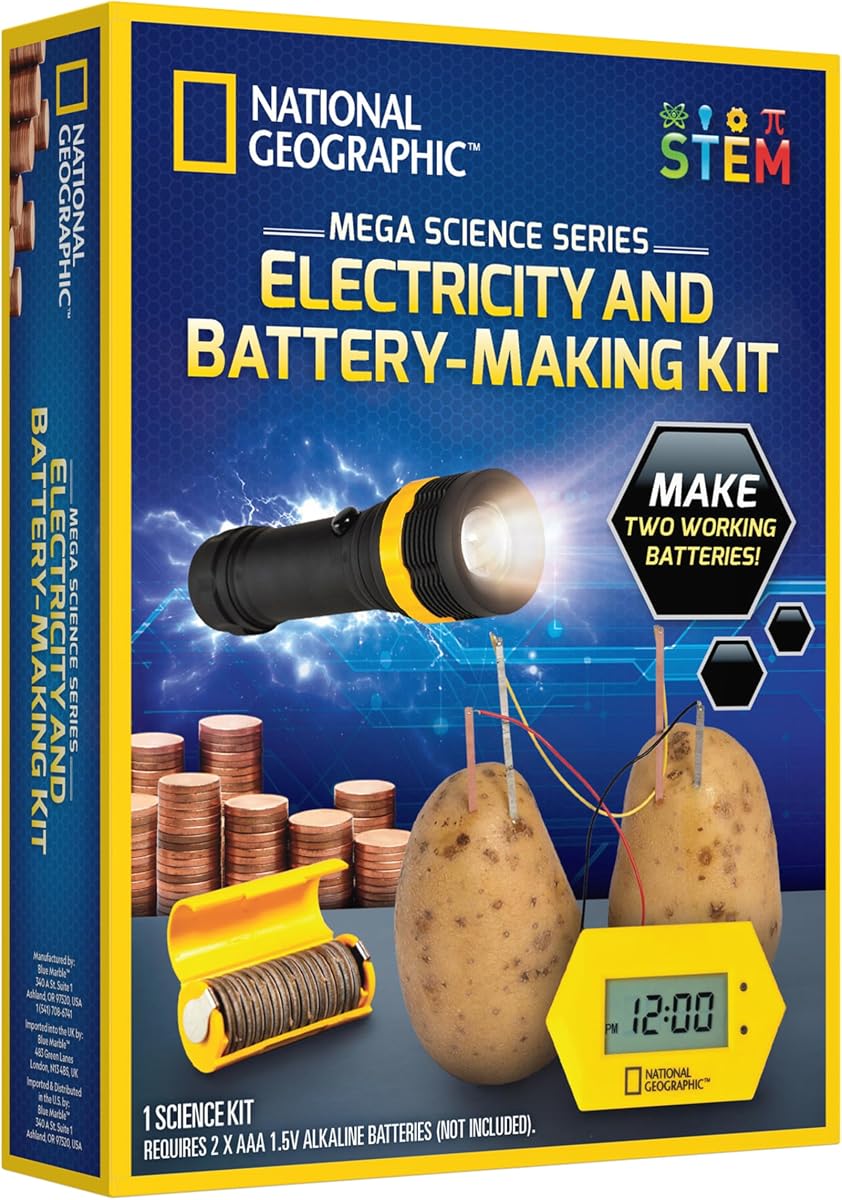
This kit focuses specifically on how batteries generate energy using simple materials. Kids can build a DIY potato clock and a coin-powered flashlight to see electricity in action.
We may earn a commission when you buy through this link, at no additional cost to you.
The included voltmeter helps measure voltage output, adding a scientific touch to the project. Instructions are easy to follow, making it a great gift for curious kids.
While the project count is limited to two, the depth of learning regarding energy storage is significant. Fresh potatoes are needed, which adds a fun element of using household items.
Ideal as an introductory STEM activity, this kit makes abstract electrical concepts real. It is recommended for families looking for a quick, engaging weekend science project.
Building a potato clock demystifies how batteries store energy. This experiment proves that everyday items can power electronics effectively.
The included voltmeter teaches students how to quantify power. This tool helps bridge the gap between theory and practical measurement.
We may earn a commission when you buy through this link, at no additional cost to you.
This upgrade kit offers projects like traffic lights and wind power cars, moving beyond simple circuits to real-world applications. It is designed for teachers and students needing versatile building tools.
We may earn a commission when you buy through this link, at no additional cost to you.
The transparent box allows for easy visibility of parts, ensuring all components are accessible. It comes ready out of the box, needing only two AA batteries to begin building.
While it costs slightly more than basic sets, the advanced projects like wind power cars justify the expense. It provides excellent hands-on opportunities for grades seven through eleven.
We recommend this for classrooms or families wanting complex, engaging projects. It is an ideal choice for older students exploring engineering design and automation.
Projects like traffic lights mimic real-world circuit logic. This application helps students connect classroom theory to everyday technology.
Wind power cars introduce renewable energy concepts early. This feature broadens the educational scope beyond just basic wiring.
We may earn a commission when you buy through this link, at no additional cost to you.
Choosing the right electricity learning kit depends on age, curriculum goals, and desired complexity. This guide outlines key factors to consider for an effective educational investment.
Ensure the kit matches the student's cognitive and motor skills. Most sets list a recommended age range, which helps prevent frustration from overly complex tasks.
Choose sets with clear age labeling to align with developmental readiness.
Look for kits offering diverse projects beyond basic lighting. Variety ensures long-term engagement and covers multiple physics concepts like motors or energy conversion.
Select kits with at least twenty varied activities for extended learning.
High-quality components like durable wires and secure connectors prevent frustration. Cheap parts can break easily, disrupting experiments and hindering the learning experience.
Prioritize kits with plastic or metal parts that withstand regular use.
Detailed manuals or video guides are essential for independent learning. Clear steps and diagrams help students troubleshoot issues without constant adult intervention.
Choose sets that include full-color manuals or QR codes for videos.
Safety should never be overlooked when buying electrical kits. Look for low-voltage components and warnings about small parts to ensure a safe environment.
Verify that the kit operates at safe voltages for the intended age group.
Organized storage keeps small parts from getting lost. A box with compartments helps maintain the kit's usability over time by keeping components sorted.
Select kits that include a storage case or bag for convenience.
Consider whether the goal is general fun or specific curriculum alignment. Some kits focus on magnetism while others on basic circuits, so match the theme to the lesson.
Align the kit's themes with current school topics for maximum impact.
Check if the kit requires batteries and whether they are included. Buying a kit that needs many batteries can add hidden costs that parents may not anticipate initially.
Prefer kits that clarify battery needs upfront to avoid surprises.
Begin by reading the manual thoroughly before starting any experiment. Understanding the safety warnings and component roles will make assembly smoother and safer for everyone involved.
Store the components in their designated cases when not in use. This prevents small parts like wires and screws from getting lost and ensures the kit remains complete.
Always turn off the power source when finishing a project to prevent battery drain. This habit protects the internal components from heat damage and extends the life of the kit.
Most kits are designed for ages eight and up with low voltages. Always check the safety labels and supervise younger children to ensure they handle small parts correctly.
Many modern kits use snap-together components that need no tools. However, some advanced sets might recommend basic screwdrivers for tighter connections. Always check the manual first.
Most standard kits use AA batteries because they are easy to find and handle. Some specialized kits may require D or C cells so check the requirements carefully before starting.
Yes, they are excellent resources for science fairs and homework. The hands-on experiments align well with middle school physics curriculums effectively.
With proper storage and gentle handling, most components last years. However, plastic clips can break if forced, so adult supervision helps maintain longevity.
Contact the manufacturer directly as many offer replacement parts or support. Some brands have online forums where you can find solutions or alternatives.
Yes, many advanced kits include both circuits and magnets. These hybrid sets offer a more comprehensive physics experience than basic electrical models.
Prices vary widely from affordable beginner options to premium advanced sets. Most high-quality kits fall in the mid-range price bracket for best value.
We highlighted top picks ranging from budget-friendly basics to advanced physics kits. Each option offers unique features designed to spark curiosity and deepen understanding of electrical principles.
Prioritize kits that match the student's age and skill level for best results. Safety and component quality should never be compromised even when looking for the lowest price.
Check current product availability and specific bundle contents before purchasing. Prices and inventory can change quickly, so verifying details ensures you get exactly what you expect.