
GIGABYTE GeForce RTX 3050 WINDFORCE OC V2 6G Graphics Card
4.6Editor score
Integrated 6GB GDDR6 memory
Compact dual fan cooling system
Strong entry level performance
Explore our expert guide comparing the top Linux graphics cards for gaming and workstations to find the best GPU for your open source setup.
Selecting the right graphics card for Linux requires careful consideration of driver support and open source compatibility to ensure smooth performance across various distributions.
We evaluated ten top models based on architecture, memory bandwidth, and community feedback to highlight options that deliver reliable rendering and compute capabilities for Linux users.
Each pick showcases key strengths and trade-offs to help you decide which GPU fits your needs, keeping in mind that prices and availability may change over time.
4.6Editor score

4.7Editor score

3.9Editor score
This side-by-side comparison highlights the key specifications and capabilities of each graphics card to help you identify the best fit for your Linux system needs.




The ASUS Dual RTX 3050 6GB stands out as a top contender for Linux users seeking a balance of performance and efficiency. Its NVIDIA Ampere architecture delivers strong throughput for both gaming and general computing tasks.
We may earn a commission when you buy through this link, at no additional cost to you.
With 2nd generation RT Cores and 3rd generation Tensor Cores, this card supports advanced features like ray tracing and AI acceleration. The Axial-tech fan design ensures efficient cooling while maintaining a compact 2-slot footprint ideal for smaller cases.
While 6GB of VRAM is modest for high-end content creation, it suffices for most gaming and everyday workloads. The dust resistance and robust build quality add to its longevity and reliability over time.
This card is best suited for gamers and professionals who need reliable performance without breaking the bank. It offers a solid foundation for Linux setups with open-source driver support.
The Axial-tech fans use a smaller hub to allow longer blades and increased air pressure for better thermal management.
Ampere SMs provide double the FP32 throughput compared to previous generations, enhancing overall rendering speed.
We may earn a commission when you buy through this link, at no additional cost to you.
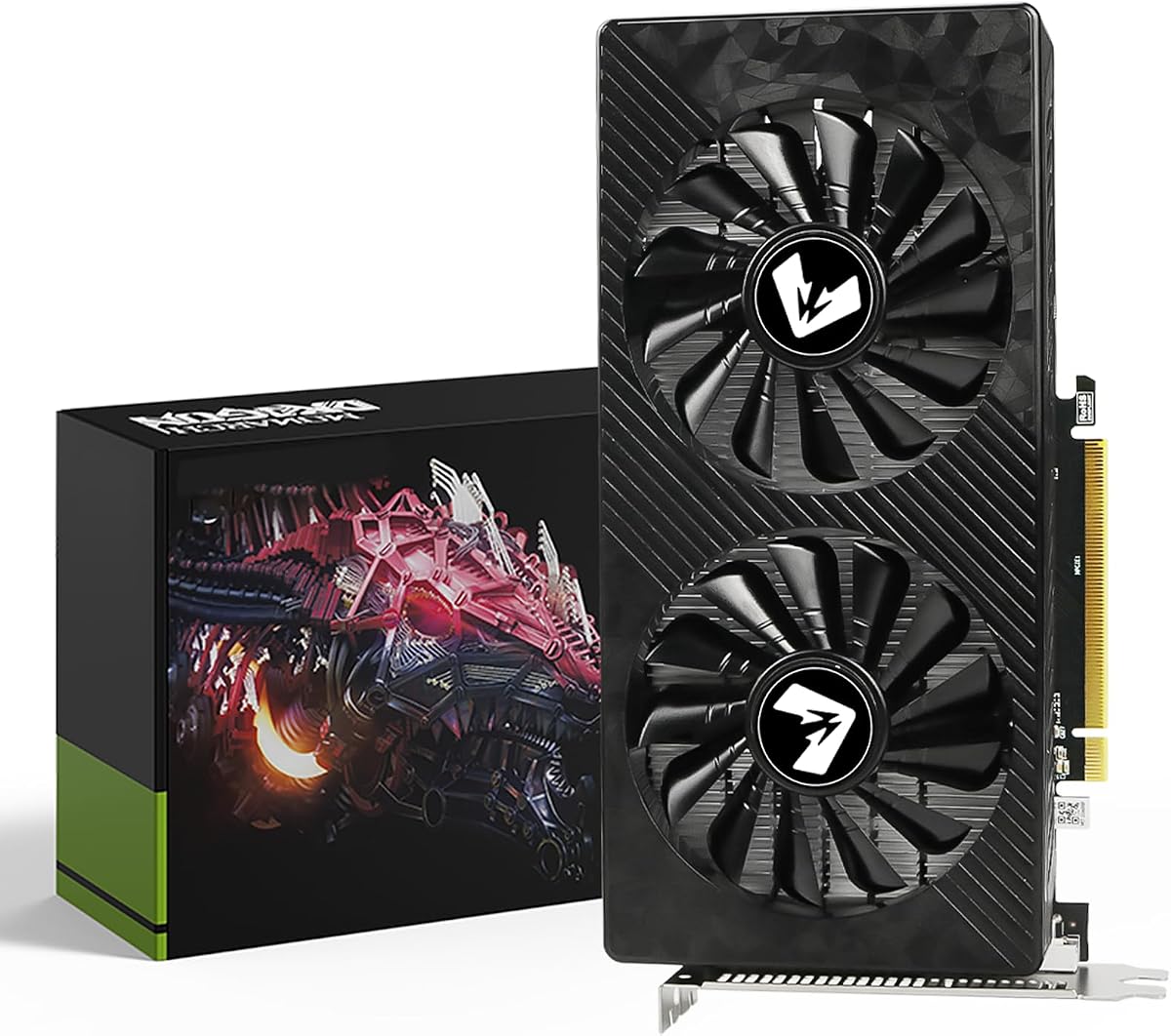
The GIGABYTE GeForce RTX 3050 WINDFORCE offers an accessible entry point into modern GPU capabilities for Linux users. It retains the core benefits of the Ampere architecture at a budget-friendly price.
We may earn a commission when you buy through this link, at no additional cost to you.
Its dual WINDFORCE fans provide adequate cooling for sustained workloads, ensuring stability during longer sessions. The compact form factor fits easily into most mid-tower cases without issue.
While it lacks some premium features, the performance per dollar makes it a strong choice for casual gamers or light workstation tasks. Linux drivers are mature and widely supported across distributions.
Buy this if you need a dependable card that delivers good performance without overspending. It remains a favorite among budget-conscious builders seeking reliability.
WINDFORCE fans use alternate spinning to reduce turbulence and improve airflow across the heatsink.
Integrated RT and Tensor cores enable ray tracing and AI features even at entry-level specs.
We may earn a commission when you buy through this link, at no additional cost to you.
The ASRock Intel Arc Pro B60 Creator is engineered for demanding workflows where memory capacity and throughput are critical. It stands apart with its massive 24GB of GDDR6 memory suitable for large models and rendering.
We may earn a commission when you buy through this link, at no additional cost to you.
Powered by Intel's Xe2-HPG architecture, it offers robust AI inference capabilities and optimized drivers for professional software. The PCIe 5.0 support ensures future-ready bandwidth for next-gen platforms.
While pricing is steep and cooling is blower-style, the scalability across multiple GPUs and support for Linux-based AI deployments make it valuable for specialized setups. ISV certification ensures stability in enterprise workflows.
This card is ideal for professionals working on AI, 3D rendering, or multi-monitor displays. It delivers premium features tailored for high-end Linux workstation environments.
With 24GB GDDR6 and 456 GB/s bandwidth, this card handles large datasets and complex scenes easily.
Dual media transcoders support AV1 and HEVC encoding while XMX engines accelerate AI workloads.
We may earn a commission when you buy through this link, at no additional cost to you.
The PNY NVIDIA T1000 is tailored for professional environments requiring certified drivers and reliable multi-display capabilities. Its Turing architecture ensures compatibility with major workstation applications.
We may earn a commission when you buy through this link, at no additional cost to you.
It supports up to four 5K displays or two 8K displays, making it ideal for control rooms and visualization tasks. Hardware encoding engines allow efficient video processing separate from 3D graphics.
While not designed for gaming, its focus on stability and multi-monitor support fits enterprise and design workflows. Linux compatibility is strong thanks to NVIDIA's professional driver stack.
Buy this if your priority is reliable multi-screen output and ISV-certified performance. It is a solid choice for offices and visualization stations.
DisplayPort 1.4 enables driving multiple high-resolution screens simultaneously without bandwidth bottlenecks.
Certified with over 100 professional applications ensures stability and compatibility in production environments.
We may earn a commission when you buy through this link, at no additional cost to you.
The GT 740 4GB Low Profile is designed for office environments needing multiple monitors and quiet operation. Its four HDMI ports enable plug-and-play multi-monitor setups without extra adapters.
We may earn a commission when you buy through this link, at no additional cost to you.
Engineered with silent cooling and compact brackets, it fits small cases while providing stable 1080p video playback. Linux support is included through standard drivers making installation straightforward.
While not suited for intensive tasks, it handles daily office work and media playback effortlessly. The low power draw reduces strain on power supplies in smaller builds.
This card is perfect for workstations or home theater PCs where cost and space are priorities. It provides essential functionality without unnecessary complexity.
Four built-in HDMI ports allow direct connection to multiple monitors for enhanced productivity.
Low profile form factor and silent fan design ensure quiet operation in noise-sensitive environments.
We may earn a commission when you buy through this link, at no additional cost to you.
The SOYO GT 740 4GB DDR3 offers a cost-effective upgrade for older desktops seeking dedicated graphics. It requires no external power and draws directly from the PCIe slot for simplicity.
We may earn a commission when you buy through this link, at no additional cost to you.
Its triple output ports include HDMI DVI and VGA for broad monitor compatibility. Linux support is reliable and ensures stable performance across office and multimedia use.
While DDR3 memory is slower than GDDR5, it suffices for everyday tasks and light gaming. The compact design fits slim PCs without needing major case changes.
Buy this if you need to revive an older system without extra power wiring. It delivers straightforward functionality for budget builds.
No external power connectors reduce wiring complexity and simplify installation for older PSUs.
Combined HDMI DVI and VGA outputs ensure compatibility with modern and legacy displays alike.
We may earn a commission when you buy through this link, at no additional cost to you.
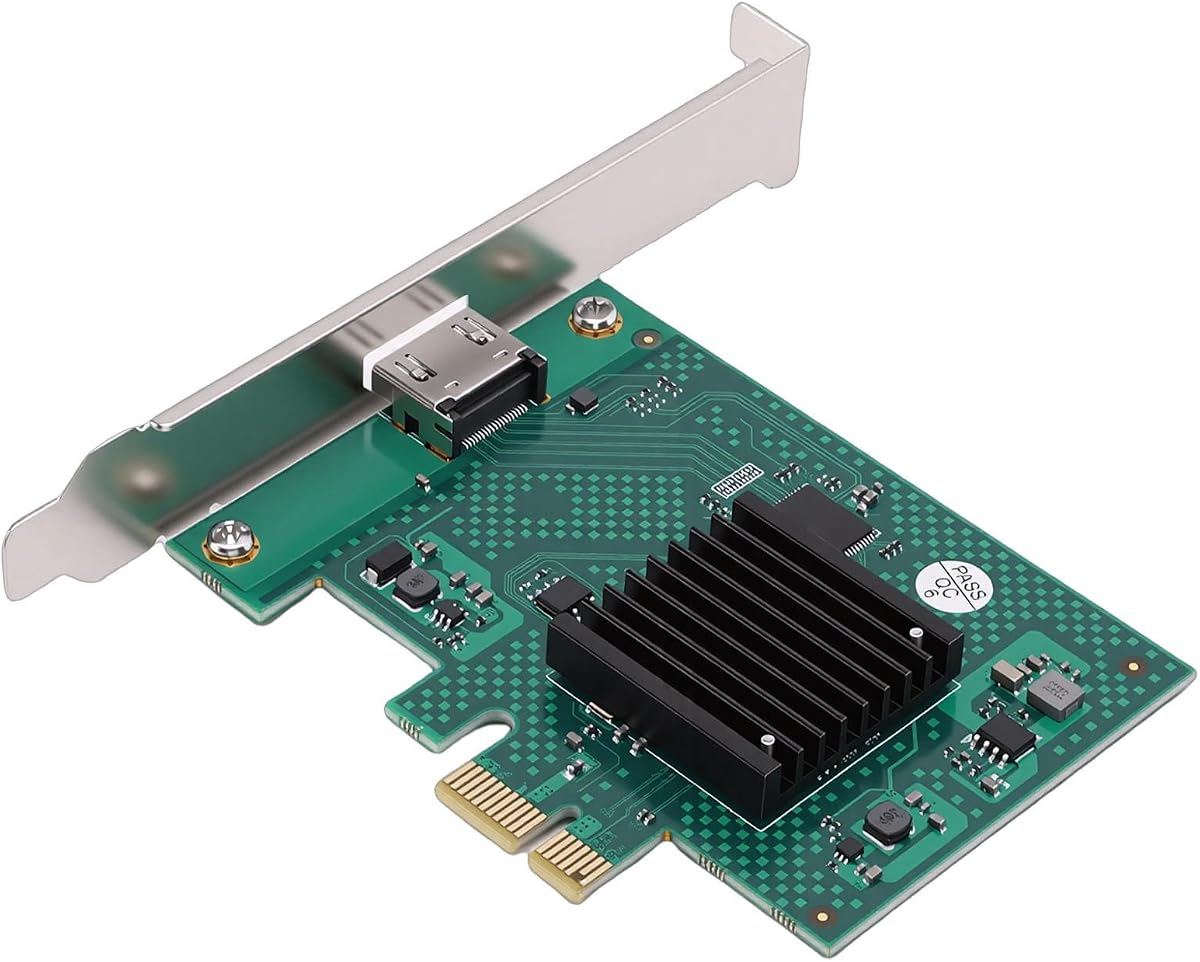
The Gugxiom PCIe x1 SM750 serves niche applications where a single HDMI display is required. It focuses on 2D acceleration and stable operation in various environments.
We may earn a commission when you buy through this link, at no additional cost to you.
Features include screen rotation and wide temperature tolerance making it suitable for industrial or embedded systems. Linux support is present but may require manual configuration.
While limited to one output and not suited for gaming, it handles video display layers and basic graphic tasks reliably. Its simplicity and low draw appeal to constrained setups.
This card works for kiosks or POS systems needing minimal graphical output. It provides a simple solution without excess features.
Operates effectively from minus 40 to plus 85 degrees Celsius for harsh environment use.
Quick rotation to 90 180 or 270 degrees improves flexibility for various mounting orientations.
We may earn a commission when you buy through this link, at no additional cost to you.
The maxsun AMD Radeon RX 550 4GB delivers entry-level gaming and multimedia capabilities with AMD's RDNA lineage support. It is optimized for small form factor builds and light titles.
We may earn a commission when you buy through this link, at no additional cost to you.
With 4GB GDDR5 and DirectX 12 support, it handles casual games and 1080p video decoding. Linux open source drivers provide decent performance for gaming and rendering tasks.
While not suitable for high-end titles, it offers smooth playback and reliable output for budget systems. The compact design fits ITX cases well without extra space.
This card suits users needing a small GPU for casual gaming or office upgrades. It balances size and performance effectively.
AMDGPU open source drivers ensure solid Linux compatibility for gaming and general use.
Designed for ITX cases with efficient cooling and small footprint for limited spaces.
We may earn a commission when you buy through this link, at no additional cost to you.
The msi GT 1030 4GB DDR4 is a compact card designed for small cases and low power setups. It supports both DisplayPort and HDMI for flexible display connections.
We may earn a commission when you buy through this link, at no additional cost to you.
Its single fan design ensures quiet operation while delivering stable performance for everyday tasks. Linux drivers work reliably for office multimedia and basic use.
DDR4 memory limits speed compared to GDDR5, but the footprint and efficiency make it ideal for SFF builds. It avoids external power requirements entirely.
Buy this if you need a small reliable GPU for mini PC upgrades. It provides essential graphics without excess bulk.
Low profile design fits tight cases while maintaining effective cooling for sustained operation.
Combined HDMI and DisplayPort outputs support modern screens with HDCP for protected content.
We may earn a commission when you buy through this link, at no additional cost to you.
The MOUGOL AMD RX 580 8GB offers solid mid-range gaming performance at an accessible price point. Its 8GB of GDDR5 memory helps handle modern titles and content creation tasks.
We may earn a commission when you buy through this link, at no additional cost to you.
Dual fan cooling maintains stable temps under load while Linux open source drivers provide dependable operation. It supports triple displays and Vulkan for versatile use cases.
While power draw is higher than newer cards, the value delivered per dollar remains strong. It is a proven option for budget-conscious gamers and creators.
This card fits users prioritizing performance and memory over efficiency. It stands as a reliable choice for entry to mid-level gaming.
Delivers consistent frame rates in popular titles thanks to ample memory and efficient shaders.
Open source AMDGPU drivers ensure smooth integration across major Linux distributions.
We may earn a commission when you buy through this link, at no additional cost to you.
Choosing the right Linux graphics card involves balancing driver support performance needs and system constraints.
Linux relies on open source or proprietary drivers depending on your card vendor NVIDIA and AMD offer mature open-source options that work well across most distributions.
Check that your chosen card has stable driver support for your specific version to avoid compatibility issues.
VRAM size affects rendering and multitasking ability. For gaming or content creation, 8GB or more ensures smoother performance with large textures and scenes.
For basic tasks 4GB suffices but higher capacity improves longevity as software demands increase.
Consider your case size when selecting a card. Low-profile or compact GPUs fit SFF builds while dual-fan cards may need larger chassis.
Measure clearance and check power supply limits before purchasing to ensure proper fit and operation.
Multiple display support often requires HDMI DisplayPort or DVI connections. Ensure your card provides enough ports for your monitor setup.
Newer standards like DisplayPort 2.1 offer higher bandwidth for high-resolution or high-refresh-rate displays.
Higher performance cards draw more power and may need external connectors. Verify your PSU can handle the TDP of your chosen GPU.
Efficiency is important for small builds or energy-saving environments where lower wattage reduces heat and noise.
Some cards support AI acceleration video encoding or multi-GPU scaling. Decide if these extras match your workflow needs.
Professional cards offer ISV certifications and stability for production environments whereas consumer cards focus on gaming and general use.
Prices vary widely between entry-level and premium models. Set a clear budget to narrow options while prioritizing essential features.
Balance cost against performance and longevity to get the best value for your use case.
Manufacturers differ in build quality and warranty service. Trusted brands often provide better cooling and longer support cycles.
Read reviews and check warranty terms to ensure peace of mind after purchase.
Install your GPU firmly into the PCIe slot and secure it with screws to prevent physical stress or disconnection during movement.
Connect all necessary power cables before powering on the system to ensure stable delivery and avoid shutdowns.
Regularly clean dust from fans and heatsinks to maintain cooling efficiency and prevent overheating over time.
AMD GPUs generally offer strong open-source driver support out of the box across major distributions. NVIDIA cards also perform well with proprietary drivers but require extra setup for certain features.
For basic tasks and office work, integrated graphics or budget GPUs are sufficient. Higher-end cards are beneficial for gaming rendering or multi-monitor setups.
Yes, NVIDIA GPUs work on Linux with proprietary or open-source drivers. Proprietary drivers offer better performance while open-source drivers provide broader compatibility.
4GB VRAM is the minimum for most games at 1080p resolution. 8GB or more is recommended for higher quality settings or future titles.
Yes, both AMD and NVIDIA GPUs support multi-monitor configurations on Linux. DisplayPort and HDMI outputs are typically supported through standard drivers.
Used GPUs can be cost-effective but may lack warranty or have higher failure rates. Ensure driver support and functionality before purchasing to avoid issues.
Linux supports ray tracing with supported hardware and drivers. AMD and NVIDIA GPUs enable this feature in compatible games and applications.
Mid-range GPUs usually require 450W to 550W power supplies. Always check your GPU's TDP and ensure your PSU has adequate connectors.
Our top picks highlight a range of options tailored to different needs from budget-friendly choices to powerful workstation GPUs.
Prioritize driver compatibility and memory capacity to ensure smooth performance with your Linux distribution over time.
Remember to verify current pricing and availability since these factors change frequently across retailers.